
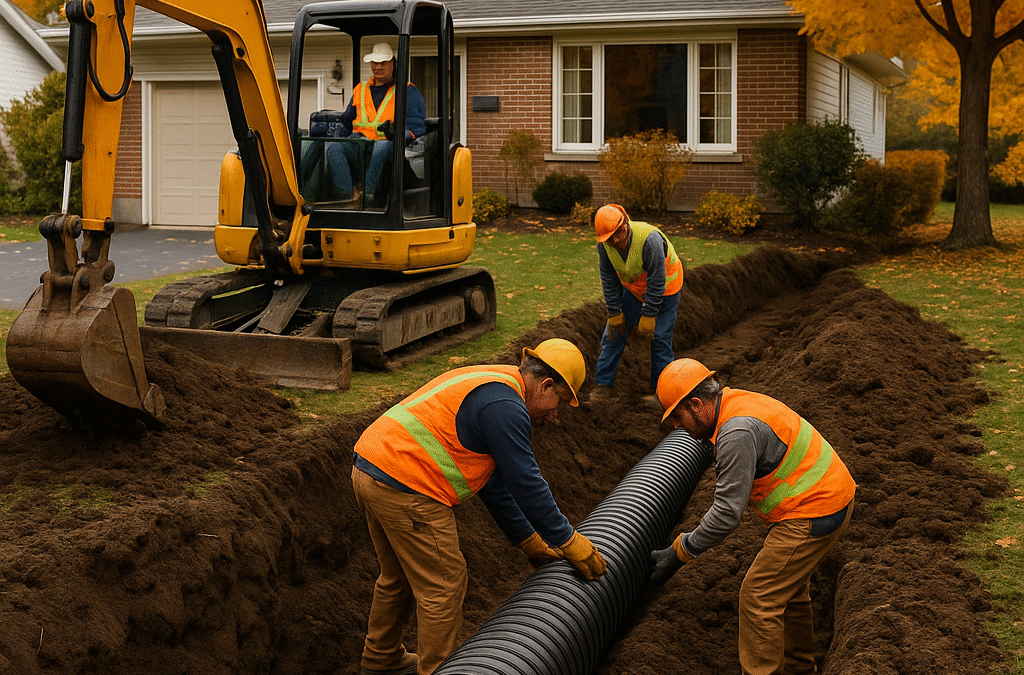
Water can be one of the most damaging forces on a property. Heavy rainfall, melting snow, and poor drainage can turn a beautiful landscape into a flooded mess. Homeowners in Ottawa, Orléans, Rockland, Clarence-Rockland, Russell, and the surrounding areas know this all too well. When water has nowhere to go, it finds the path of least resistance, and that path often leads straight toward your home, driveway, or foundation.
One of the most effective ways to manage water flow and protect your property is through professional trenching and culvert installation. These essential drainage solutions prevent erosion, flooding, and long-term structural damage by ensuring that water moves where it should, away from your home.
Understanding Trenching and Culvert Installation
What Is Trenching?
Trenching involves digging narrow, precise channels in the ground to guide water runoff away from vulnerable areas. Trenches are designed to carry water toward a designated drainage point such as a ditch, swale, or storm drain.
Properly designed trenches are graded to maintain a steady slope, allowing gravity to do the work. They can be lined with gravel or fitted with pipes depending on the soil type and drainage needs. When done professionally, trenching prevents water pooling and maintains soil stability even during the heaviest storms.
What Is a Culvert?
A culvert is a pipe or passage that allows water to flow underneath driveways, walkways, or low-lying areas. It ensures uninterrupted drainage between two sides of a property while keeping the surface above stable and accessible.
Culverts are particularly important for rural or semi-rural properties, where natural water paths cross driveways or roadways. Without them, water builds up and erodes soil, weakening surfaces and creating deep ruts.
Why Drainage Matters in Ottawa’s Climate
Ottawa’s weather creates constant challenges for homeowners. The region experiences a full range of moisture conditions — heavy rain in the fall, deep snow in the winter, and rapid melts in the spring. This combination leads to significant runoff, which can overwhelm poorly graded or unprotected properties.
Without proper trenching and culverts in place, this runoff can:
- Flood basements and crawlspaces
- Undermine driveways and walkways
- Create muddy, unusable yards
- Lead to erosion and landscape damage
- Freeze into ice hazards in winter
Proactive drainage work helps prevent these issues before they start. November, when the ground is still workable, is one of the best times to complete these projects before the first deep freeze.
Signs You Might Need Trenching or a Culvert
Pooling or Standing Water
If puddles linger after rain, your property isn’t draining properly. Even small depressions can trap enough water to damage lawns, roots, and foundations over time.
Erosion or Washed-Out Areas
Bare soil, ruts, or exposed roots are signs that water is flowing too forcefully across your yard. Trenching can redirect that flow, preserving your landscape.
Driveway Washouts
If water runs down or across your driveway during storms, it can wash away gravel or weaken asphalt. Installing a culvert under the driveway allows safe passage for water and protects your surface from erosion.
Foundation Dampness or Leaks
Water pooling near your home’s foundation can seep through walls and cause basement leaks. Correcting the grading and adding trenches to redirect flow can eliminate this issue entirely.
The Trenching and Culvert Installation Process
1. Site Evaluation
A professional team begins by inspecting your property’s layout, soil type, and existing drainage patterns. They identify problem areas and design a system that directs water efficiently without disturbing structures or utilities.
2. Planning the Drainage Path
The route of the trench or culvert is mapped based on elevation and slope. This ensures that water will flow naturally, using gravity as the primary force.
3. Digging and Installation
Using specialized excavation equipment, the trench is dug to the correct depth and slope. For culverts, durable pipes (often corrugated steel or high-strength PVC) are installed below the surface, allowing water to pass safely underneath driveways or walkways.
4. Backfilling and Compaction
Once the system is in place, the trench is backfilled with gravel or soil and compacted for stability. The area is graded smoothly to blend into the landscape, ensuring that surface runoff continues to flow as intended.
5. Testing and Cleanup
Before the job is complete, the drainage system is tested to confirm proper water flow. The worksite is cleaned, leaving the property looking neat, functional, and ready for winter.
Integrating Trenching With Other Property Improvements
Trenching and culvert installation are often part of larger property management projects. They pair perfectly with other excavation or grading services, such as:
- Driveway preparation and compaction — ensuring water drains away instead of pooling.
- Lot clearing and land prep — shaping the land to control runoff.
- Tree removal and stump extraction — eliminating root barriers that block drainage paths.
When completed together, these services provide a comprehensive solution that enhances both the safety and longevity of your property.
Common Mistakes to Avoid
Improper Slope
Even a small miscalculation in slope can cause water to stagnate or flow backward. Professionals use laser levels to ensure precise grading so water moves exactly where it should.
Wrong Pipe Size
Culvert pipes that are too small will clog or overflow during heavy rain. Choosing the right diameter ensures reliable performance year-round.
Skipping Compaction
After trenching or culvert installation, soil must be properly compacted. If skipped, the ground will settle unevenly, leading to cracks, depressions, or surface collapse later.
Avoiding these mistakes means your system will last longer and require less maintenance over time.
The Benefits of Professional Drainage Work
Investing in proper trenching and culvert installation offers immediate and long-term benefits:
- Protects your home and foundation from water damage.
- Keeps driveways, lawns, and walkways stable and dry.
- Prevents soil erosion and maintains landscaping.
- Reduces ice buildup during winter.
- Adds long-term value to your property.
A well-drained property isn’t just safer, it’s more functional and easier to maintain throughout the year.
Timing Is Everything
The best time for trenching and culvert installation is before the ground freezes and heavy snow arrives. Late fall offers the perfect balance of firm soil and mild weather, allowing work to be completed efficiently without disturbing spring plans.
By handling drainage issues now, you’re protecting your investment before Ottawa’s harsh winter puts it to the test.
Request Your Free Quote Today
Don’t wait until spring flooding or icy driveways reveal drainage problems. Take action now and ensure your property is ready for the season ahead.
Call Gallant Services at 613-834-0050 or request your free quote today.
Our team specializes in professional trenching, culvert installation, grading, and excavation, delivering durable solutions that protect your property and keep it looking its best in every season.