
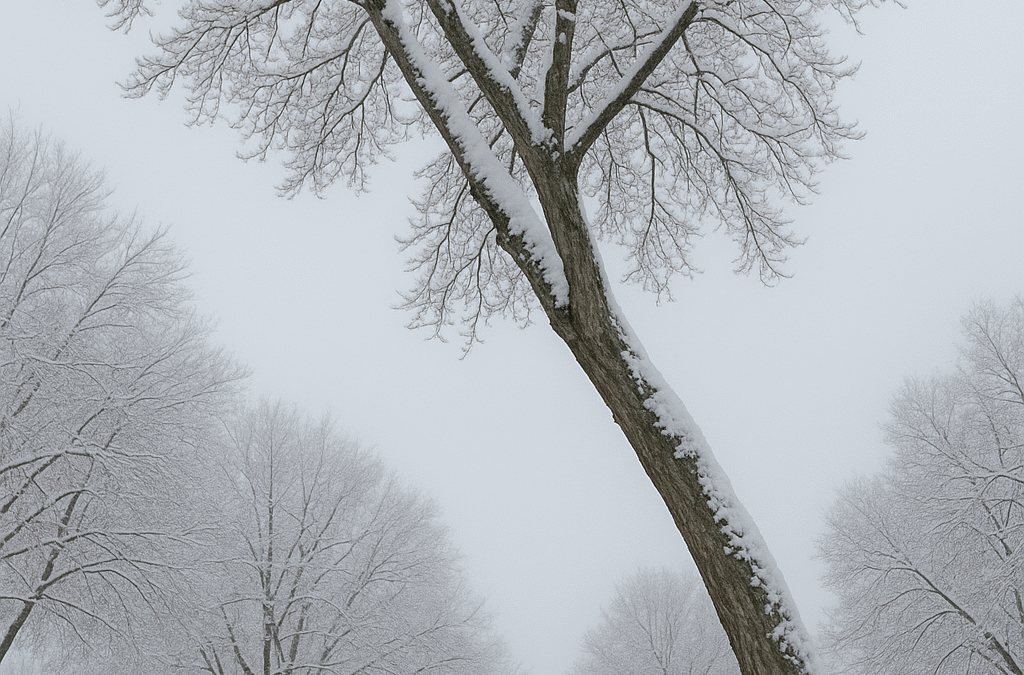
Every winter here in Ottawa, Orléans, Rockland, Clarence-Rockland, Russell, and the surrounding areas, we see the same challenges repeat themselves. Heavy snow settles onto tree branches, ice storms freeze everything solid, and high winds tear through neighbourhoods, and trees that seemed perfectly stable in the fall suddenly become dangerous.
As a professional tree service team, we take winter tree safety seriously. Trees behave differently in cold weather, and their vulnerabilities become far more pronounced. Winter exposes weaknesses that aren’t always visible during warmer months, and without proper care, those weaknesses can turn into costly or even dangerous situations.
In this article, we’ll walk you through how we at Gallant Services assess, identify, and prevent hazardous trees during the winter season, and why taking action now can save your property from major damage.
Winter Hazards: Why Trees Become More Dangerous This Time of Year
Winter is a stress test for every tree on your property. Even healthy trees face threats during the colder months, but vulnerable or neglected trees are at particularly high risk.
Snow Load Stress
Snow seems soft when you scoop it up with your hands, but once it piles onto branches, it becomes surprisingly heavy. Wet snow, in particular, can add hundreds of pounds of pressure to the limbs of mature trees.
Branches that bend may snap, and trees that are already leaning may topple under the added weight.
Ice Storm Impact
In Ottawa and the surrounding areas, freezing rain is one of the most destructive weather events for trees.
A thin layer of ice creates:
- Brittle branches
- Rapid limb snapping
- Trunk cracks
- Hazardous falling debris
When we get calls after an ice storm, it’s usually because a tree that looked perfectly fine the day before has suddenly split, broken, or collapsed.
High Winter Winds
Windstorms in the Ottawa region can push even healthy trees to their limits. When soil is frozen and compacted, roots can’t move naturally, and the pressure builds at the trunk instead.
For unstable trees, this often results in:
- Uprooting
- Broken stems
- Complete tree failure
We see this often after back-to-back storms or rapid temperature changes.
How We Identify Hazardous Trees in Winter
Every tree tells a story if you know what to look for. Over the years, we’ve developed a thorough method for identifying dangerous trees in winter, and even the smallest signs can predict major issues.
1. We Check for Cracks in the Trunk
Cracks can be hidden during the summer when trees are full of leaves, but winter exposes everything. Large vertical cracks, splits, or bulges along the trunk indicate structural weakness.
These trees are often the first to fail during winter storms.
2. We Inspect for Dead or Brittle Branches
Dead branches are lighter than healthy ones, but ironically, they break much more easily under winter pressure. They snap unpredictably and fall without warning.
We look for:
- Hollow branches
- Dry, peeling bark
- No budding at the tips
- Branches that don’t bend
3. We Look for Leaning Trees
Some leaning is natural, but when a tree leans significantly or has started leaning more over the years, we take it seriously — especially in winter.
A leaning tree near:
- A house
- A driveway
- A pedestrian path
- A garage
- A fence
…becomes a hazard under snow load or strong winds.
4. We Evaluate Root Stability
Root problems are harder to see, but winter reveals clues:
- Soil heaving
- Root exposure
- Cracking at the soil line
- The tree rocking during wind
These signs tell us the tree may not stay upright for long.
5. We Look for Disease or Decay
Rot or decay weakens trees internally. Even if the exterior looks normal, the inside may be hollow or soft — a dangerous situation in winter.
Signs include:
- Fungus at the base
- Mushrooms
- Soft, spongy bark
- Wood dust from pests
6. We Watch for Trees Too Close to Structures
Even healthy trees can become hazards if they’re planted in the wrong location. Trees growing too close to homes or driveways can damage siding, roofs, vehicles, and other property during winter storms.
How We Remove Dangerous Trees Safely in Winter
Winter tree removal is not the same as removing a tree in summer. Frozen ground, icy surfaces, and weather unpredictability call for precision and experience.
Here’s how we do it.
We Use Winter-Safe Equipment
Our chainsaws, chippers, and compact equipment are winter-ready. Snow and ice require careful handling, and we have the experience to operate efficiently in slippery conditions.
We Remove Trees in Controlled Sections
Instead of felling the tree whole, which is rarely safe in residential settings, we remove hazardous trees in sections:
- Top branches removed first
- Mid-level limbs next
- The trunk lowered in controlled cuts
This prevents accidental property damage.
We Protect Your Lawn and Surroundings
Even in winter, we strive to protect your yard. Snow cover allows us to move equipment safely with minimal lawn impact.
We Offer Same-Day Emergency Removal When Needed
If a tree is threatening your home or has already fallen, we respond quickly. Winter emergencies are extremely common in Ottawa and surrounding areas, and we make safety our first priority.
Why Winter Pruning Is Critical for Tree Health & Safety
Pruning isn’t just about shaping trees, it’s essential for winter stability.
Pruning Removes Weak Limbs
Removing weakened or dead branches reduces the chances of breakage under snow or ice.
Pruning Improves Tree Structure
Selective trimming allows the tree to handle snow load more evenly, strengthening its natural frame.
Pruning Enhances Sunlight Reach
Winter sun helps melt snow and ice faster. A properly pruned tree won’t trap shade in the wrong places.
Better Air Movement Reduces Ice Build-Up
Airflow prevents ice accumulation on overcrowded branches.
Tree Safety Near Driveways, Walkways & Buildings
We often find dangerous trees near driveways and walkways, the areas with the most foot and vehicle traffic.
A fallen branch in these areas could:
- Damage a parked car
- Block access
- Cause injuries
- Crush a walkway or railing
If you live in Ottawa, Orléans, or Rockland, where many homes sit close together, tree placement becomes even more important. Winter storms don’t leave much room for error.
When Removal Isn’t Necessary: Winter Tree Stabilization
Sometimes the solution doesn’t involve removing the tree. We’re committed to preserving trees whenever possible.
We may recommend stabilization methods like:
- Cabling
- Bracing
- Weight reduction pruning
- Root zone cleanup
- Snow load relief
These techniques help support trees through the harshest months without requiring full removal.
Why Ottawa-Area Residents Trust Us Every Winter
We’ve worked through countless winters across Ottawa, Orléans, Clarence-Rockland, Russell, and nearby communities. We understand:
- Local soil conditions
- Tree species common in the region
- Weather patterns unique to Eastern Ontario
- How winter affects drainage, roots, and stability
Every winter storm teaches us more — and we apply those lessons to protect your home.
Call Us at 613-834-0050 to Book Your Winter Tree Safety Inspection
If you’re worried about a tree on your property or simply want peace of mind this winter, we’re here to help.
Call us at 613-834-0050 to book your winter tree safety inspection.
We proudly serve Ottawa, Orléans, Rockland, Clarence-Rockland, Russell, and surrounding areas with professional, reliable winter tree care services.