
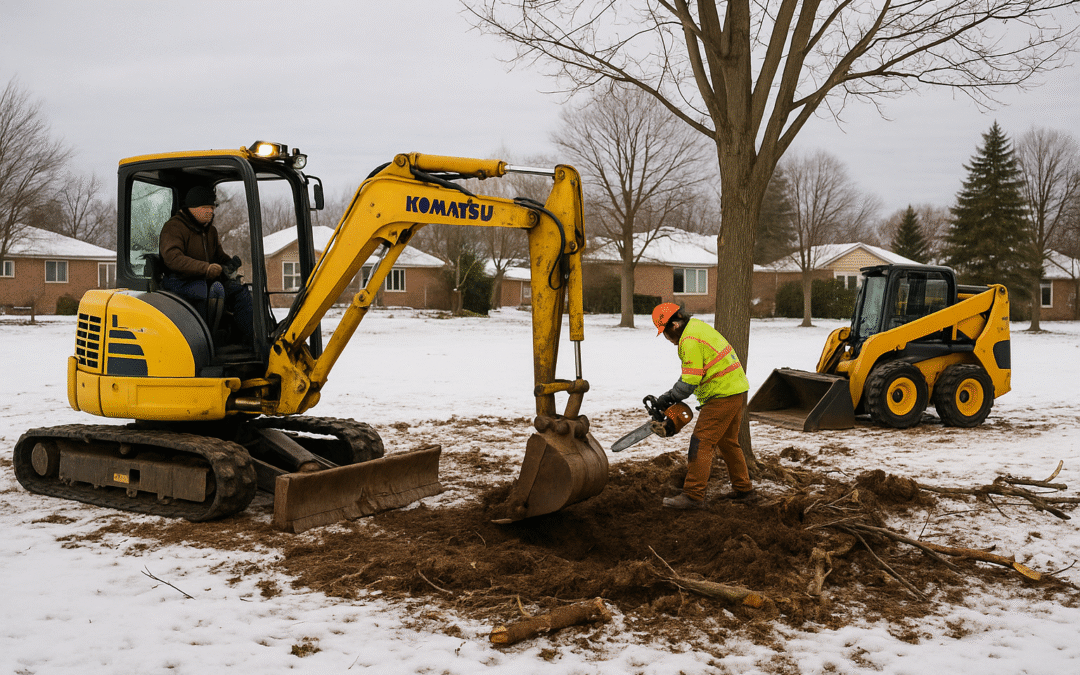
January is the month when winter pressure on trees reaches its peak across Ottawa, Orléans, Rockland, Clarence-Rockland, Russell, and the surrounding areas. By this point in the season, trees have endured weeks of snow accumulation, freezing rain, and repeated freeze-thaw cycles. Branches that survived early winter may now be overloaded, roots are locked into frozen soil, and strong winds can turn a stressed tree into an immediate hazard.
At Gallant Services, January is one of our busiest months for emergency tree calls. These situations are often sudden and dangerous, and knowing how to respond quickly — and correctly — can make the difference between minor cleanup and major property damage.
In this blog, we explain why winter tree emergencies happen, what warning signs homeowners should watch for, how we safely handle emergency situations, and how proactive winter tree care protects properties throughout the Ottawa region.
Why January Is the Peak Month for Tree Emergencies
By mid-winter, trees are under constant stress. January combines several risk factors that increase the likelihood of sudden tree failure.
Heavy Snow Load
Snow may look light, but wet, compacted snow can weigh hundreds of pounds when it accumulates on branches. As layers build, branches bend lower and weaker joints begin to fail.
Ice Accumulation
Freezing rain coats branches with ice, making them rigid and brittle. Even healthy trees can crack or snap when ice load exceeds their structural capacity.
Frozen Ground Limits Root Movement
When soil is frozen solid, roots cannot flex or absorb wind movement. Instead, pressure transfers to the trunk, increasing the risk of splitting or uprooting.
High Winter Winds
Strong January winds push stressed trees past their limits. Many emergency calls occur immediately after windstorms, even without additional snowfall.
These conditions are common throughout Ottawa, Orléans, Rockland, Clarence-Rockland, and Russell, making January the most critical time for tree safety.
Common Winter Tree Emergencies We See in January
Split or Cracked Trees
Cracks often form along the trunk or where large branches connect. These splits may be difficult to see under snow but can worsen rapidly.
Hanging or Broken Limbs
Broken branches may remain suspended in the canopy. These “widowmakers” are extremely dangerous because they can fall without warning.
Leaning Trees
A tree that suddenly leans more than usual is often signaling root failure. In frozen soil, this condition rarely corrects itself.
Uprooted Trees
When roots lose stability, trees may partially or fully uproot. This is especially common after storms followed by rapid temperature changes.
Trees Pressing Against Structures
Branches or trunks may shift under snow load and begin contacting roofs, siding, fences, or power lines.
Warning Signs Homeowners Should Never Ignore
January emergencies often provide subtle warnings before failure occurs. We encourage homeowners across the Ottawa region to contact us if they notice:
- Branches sagging unusually low
- Fresh cracks in the trunk or large limbs
- Bark splitting or separating
- Trees rocking during wind
- Roots lifting soil at the base
- Sudden changes in tree lean
- Loud cracking sounds during storms
Ignoring these signs can allow a controllable situation to become an emergency.
What to Do When a Tree Emergency Occurs
Prioritize Safety
If a tree or branch is threatening your home, driveway, or walkway, keep people and pets away from the area. Do not attempt to remove branches yourself, especially in icy conditions.
Avoid DIY Removal
Winter tree emergencies are unpredictable. Frozen wood can snap unexpectedly, and tension within branches can cause sudden movement.
Contact Professionals Immediately
Emergency tree situations require trained crews, proper equipment, and experience working in winter conditions. Acting quickly helps prevent additional damage.
How We Handle Winter Tree Emergencies Safely
At Gallant Services, our emergency response process is designed to restore safety quickly while protecting surrounding property.
Emergency Assessment
We evaluate the situation to identify immediate hazards, determine how the tree is failing, and decide the safest removal approach.
Controlled Sectional Removal
Rather than cutting trees down whole, we remove them in controlled sections. This reduces risk to nearby structures and allows precise handling in confined areas.
Winter-Ready Equipment
Our equipment is designed to operate safely on snow and ice. This allows us to work efficiently without unnecessary damage to lawns or surfaces.
Debris Removal and Cleanup
Once the hazard is removed, we clear debris so access is restored and no secondary hazards remain.
Why Winter Tree Removal Is Often Necessary
Some homeowners hesitate to remove trees in winter, but January is often the safest time to act.
Benefits of winter removal include:
- Reduced lawn damage due to frozen ground
- Clear visibility with bare canopies
- Immediate elimination of hazards
- Lower risk of additional storm damage
- Better preparation for spring
Removing a dangerous tree in January often prevents emergency situations later in the season.
Preventing Tree Emergencies Before They Happen
Emergency calls are stressful, but many winter tree emergencies are preventable.
Proactive Winter Inspections
We assess tree health, structure, and placement to identify risks early.
Selective Winter Pruning
Removing weak limbs reduces snow load stress and improves canopy balance.
Strategic Tree Removal
Trees that are structurally compromised or poorly positioned may be safer to remove before they fail.
Root and Ground Evaluation
We evaluate root stability and soil conditions to reduce uprooting risk.
These steps help homeowners across Ottawa, Orléans, and surrounding areas reduce emergency situations significantly.
Tree Emergencies in Residential vs. Rural Areas
Urban and Suburban Properties
In dense neighborhoods, trees are often closer to homes, fences, and driveways. Even small failures can cause serious damage.
Rural and Larger Properties
In areas like Russell and Clarence-Rockland, trees may appear less threatening but can block access roads, damage long driveways, or affect outbuildings.
Our approach is tailored to each property’s layout and risk level.
Why Local Experience Matters in January Tree Emergencies
Winter tree behavior varies by region. Our experience across Ottawa and surrounding communities allows us to anticipate how local trees respond to snow, ice, and wind.
We understand:
- Regional tree species
- Soil conditions and frost behavior
- Common winter failure patterns
- Safe winter removal techniques
This knowledge allows us to respond quickly and safely during emergencies.
The Cost of Delaying Action
Delaying tree emergency response can result in:
- Structural damage
- Vehicle damage
- Blocked access
- Injuries
- Increased removal costs
January is not the time to wait and hope a tree holds together.
A Calm, Professional Approach to Winter Tree Emergencies
Tree emergencies are stressful, but having the right team makes all the difference. Our goal is to restore safety, protect property, and give homeowners peace of mind during winter’s most unpredictable conditions.
Contact Us for Emergency Tree Services This January
If you’re dealing with a dangerous tree or want to prevent an emergency before it happens, we’re here to help.
Call us at 613-834-0050 to schedule emergency or preventive winter tree services.
We proudly serve Ottawa, Orléans, Rockland, Clarence-Rockland, Russell, and surrounding areas.
Acting now can prevent serious damage and keep your property safe through the rest of winter.