
A beautiful outdoor living space can completely change how a property is used. A well-planned patio can become a gathering place for family dinners, summer celebrations, quiet evenings, and everyday relaxation. Outdoor kitchens, fire features, seating areas, walkways, and other improvements can extend the usable living space of a home well beyond its walls.
However, the finished surface is only part of what determines whether an outdoor space performs well over time.
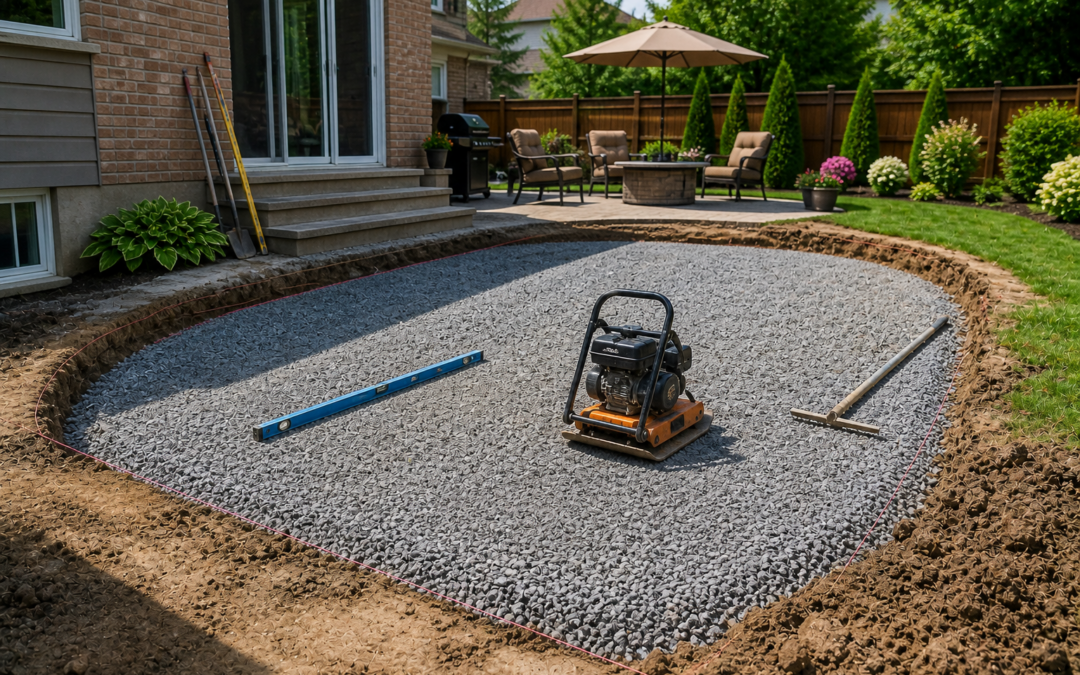
Before pavers, concrete, landscaping, or other finishing materials are installed, the ground underneath needs to be properly prepared. Excavation depth, soil conditions, base preparation, grading, drainage, and compaction all influence the stability and longevity of the finished area.
Across Ottawa, Orléans, Rockland, Clarence-Rockland, Russell, and surrounding Eastern Ontario communities, outdoor surfaces must also withstand demanding seasonal conditions. Rainfall, spring snowmelt, winter freezing, and repeated freeze-thaw cycles can expose weaknesses in poorly prepared sites.
At Gallant Services, we provide professional excavation, grading, drainage, land clearing, and site preparation services for residential and rural property improvements. When preparing an outdoor living area, we focus on what happens beneath the finished surface because the quality of that preparation can influence everything built above it.
A Great Patio Begins Below the Surface
When homeowners imagine a new patio, they usually think about its finished appearance.
They may picture comfortable furniture, a barbecue, attractive landscaping, or a place where friends and family can gather.
What they may not picture is the excavation underneath.
Yet before many patios can be installed successfully, existing soil and other unsuitable material need to be removed to create room for an appropriate base.
The depth and preparation required depend on the project, existing ground conditions, drainage, and intended surface.
Skipping proper excavation may save time initially, but it can contribute to problems later.
Why Simply Building on Existing Ground Can Be Risky
A lawn may appear firm and level, but that does not necessarily mean it is ready to support a permanent outdoor surface.
Beneath the grass may be:
- Topsoil
- Organic material
- Soft soil
- Roots
- Previously disturbed fill
- Uneven ground
These materials may not provide the stable support required for a patio or similar improvement.
Organic soil, in particular, can change as material decomposes.
Professional excavation removes unsuitable material where required and creates space for a more dependable base.
Base Preparation Supports the Finished Surface
The surface of an outdoor living area receives most of the attention, but the underlying base performs much of the structural work.
A properly prepared base helps distribute loads and maintain a more consistent surface.
Depending on the project, preparation may involve placing suitable aggregate in layers and compacting it appropriately.
The objective is to create a stable platform for the finished installation.
If the base is inconsistent, areas can settle differently.
The result may eventually include uneven surfaces, movement, or low spots where water begins collecting.
Compaction Is an Essential Part of Site Preparation
Loose material naturally contains voids.
When weight is repeatedly applied, that material can settle.
Professional compaction reduces these voids and helps create a denser, more stable base.
Compaction is particularly important in areas that may support:
- Patio furniture
- Outdoor kitchens
- Barbecues
- Fire features
- Hot tubs where professionally designed for the load
- Other substantial outdoor improvements
The appropriate preparation should always reflect what the finished space is intended to support.
Drainage Should Be Planned Before the Patio Is Installed
One of the most important considerations for any outdoor living space is water.
A patio creates a surface that changes how rainfall moves across the yard.
Before the patio existed, some precipitation may have soaked into the soil. Once the new surface is installed, more water may move across it toward surrounding areas.
That runoff needs somewhere appropriate to go.
Professional grading helps establish elevations that encourage water to move away from buildings and other vulnerable areas.
Without proper planning, a new patio can unintentionally create drainage problems that did not previously exist.
The Patio Should Work With the Home’s Existing Grade
Outdoor living spaces are often built directly beside a home.
That makes the relationship between the patio and foundation especially important.
The finished grade should be planned so surface water does not continually travel toward the house.
Existing conditions also need to be considered.
If the yard already slopes toward the foundation, installing a patio without correcting the broader grade may make the problem more difficult to address later.
At Gallant Services, we evaluate the outdoor area as part of the complete property drainage system.
Low Spots Can Become Permanent Puddles
A small depression in a patio area may not seem significant during construction.
Once the finished surface is installed, however, that low spot can become a location where water repeatedly collects.
Standing water can make the area less enjoyable and may contribute to deterioration during seasonal temperature changes.
Accurate excavation and base preparation help establish more consistent elevations before the final surface is installed.
It is much easier to correct grade during site preparation than after the outdoor living space is complete.
Eastern Ontario’s Freeze-Thaw Cycles Matter
Outdoor surfaces in Ottawa and Eastern Ontario experience challenging winter conditions.
Moisture can enter soil and aggregate before temperatures fall below freezing. As temperatures change, repeated freezing and thawing can contribute to ground movement in susceptible areas.
A properly prepared base and effective drainage help reduce unnecessary moisture beneath outdoor surfaces.
No site preparation can eliminate Canadian winter conditions, but thoughtful excavation can help create an outdoor space better suited to the local climate.
Spring Snowmelt Can Test Outdoor Drainage
Spring introduces another challenge.
Large amounts of accumulated snow may melt over a relatively short period while parts of the ground remain frozen.
Water can travel across the surface rather than soaking into the soil.
If an outdoor living area interrupts the property’s natural drainage route, runoff may collect around the patio or move toward the house.
Planning drainage during excavation allows the finished area to become part of a coordinated water-management strategy.
Outdoor Kitchens Require Careful Preparation
An outdoor kitchen can place greater demands on the underlying site than a simple seating area.
Cabinetry, counters, appliances, and other features add weight and may require utility connections.
Site preparation should consider:
- Base stability
- Finished elevations
- Drainage
- Utility routes
- Access during construction
Planning these elements before the final surface is installed can reduce the need to disturb completed work later.
Utility Trenching Should Happen at the Right Stage
Some outdoor spaces require underground services.
Depending on the project, this could include electrical conduit, water lines, drainage components, or other infrastructure installed by the appropriate professionals.
If utility routes are identified early, trenching can often be coordinated with excavation.
Installing a beautiful patio and then cutting through it because an underground service was overlooked is an avoidable disruption.
Good site planning considers both what will be visible and what needs to remain beneath the surface.
Walkways Need Proper Preparation Too
The same principles that apply to patios also apply to walkways.
A walkway may experience less weight, but settlement and poor drainage can still create problems.
Uneven surfaces can become uncomfortable and may create tripping concerns.
Professional excavation can establish an appropriate base while coordinating the walkway elevation with:
- Driveways
- Patios
- Building entrances
- Lawns
- Garden areas
The finished property works best when these individual surfaces are planned together.
Outdoor Living Spaces on Sloped Properties
A sloped yard does not necessarily prevent the creation of an attractive outdoor space, but it can make site preparation more complex.
Excavation may be needed to create a practical area while preserving appropriate drainage.
Depending on the project design, surrounding grades may also need adjustment.
Water travelling from higher portions of the property needs to be considered before the finished outdoor space is installed.
Otherwise, runoff may flow directly across the new patio.
Professional grading helps integrate the outdoor area with the surrounding terrain.
Rural Properties Offer Opportunities and Challenges
Larger properties throughout Rockland, Clarence-Rockland, Russell, and surrounding Eastern Ontario communities often provide more flexibility for outdoor living areas.
Homeowners may have space for larger patios, gathering areas, pathways, or recreational spaces.
However, rural terrain can also include:
- Significant slopes
- Wooded areas
- Variable soil
- Natural drainage routes
- Longer distances from utilities
Professional excavation can prepare these spaces while accounting for the broader characteristics of the property.
Smaller Ottawa and Orléans Yards Need Precision
In Ottawa and Orléans, homeowners may have less room to work with.
Patios can sit close to foundations, fences, neighbouring properties, sheds, and established landscaping.
That makes accurate grading particularly important.
There may be limited space available for runoff, meaning even small elevation changes can influence where water travels.
Careful excavation allows the outdoor living area to fit into the available space without overlooking drainage.
Existing Landscaping May Need Protection
Outdoor renovation projects frequently take place on established properties.
Homeowners may want to preserve trees, gardens, fences, lawns, and other features while preparing the new area.
Professional equipment operation helps limit excavation to the necessary portions of the site.
Access also needs to be considered.
A large machine cannot always reach a backyard without affecting surrounding areas, so the equipment and approach should be suited to the property.
Planning Access Before Excavation Begins
Getting equipment into the work area is an important part of site preparation.
Potential access routes may pass near:
- Driveways
- Side yards
- Fences
- Gardens
- Neighbouring properties
The route needs to accommodate machinery while minimizing avoidable disruption.
This consideration is particularly important on established urban and suburban properties.
Planning access before excavation begins can make the project more organized from the first day.
Drainage Improvements Can Be Completed at the Same Time
If a backyard already experiences drainage problems, patio preparation may provide an opportunity to address them.
Instead of building around a recurring wet area, the project can include grading improvements where appropriate.
This may involve reshaping portions of the property, creating a surface drainage route, or preparing other drainage features.
Coordinating these improvements can help the new patio become part of a better-functioning yard rather than another obstacle to water movement.
Prepare for Future Landscaping Before Finishing the Grade
The outdoor living area rarely exists by itself.
Homeowners may eventually add:
- Garden beds
- New lawns
- Trees or shrubs
- Walkways
- Other outdoor features
The final grade should allow these areas to connect naturally with the patio.
Planning ahead can help avoid abrupt elevation changes or drainage conflicts between different parts of the landscape.
A coordinated site creates a more polished finished property.
Excavation Can Help Transform an Unusable Backyard
Some outdoor areas are difficult to enjoy because the terrain is uneven, wet, or poorly organized.
Professional excavation and grading can dramatically change how these spaces function.
A sloped or neglected section of a yard may be reshaped to support a practical outdoor living area while maintaining proper drainage.
This transformation begins before any decorative materials are installed.
By correcting the underlying site conditions first, homeowners can build their finished outdoor improvements on stronger groundwork.
Avoiding Expensive Rework
One of the greatest benefits of professional site preparation is reducing the likelihood that finished work will need to be removed later.
Imagine installing an entire patio only to discover that water consistently pools against one edge.
Correcting the grade may require lifting portions of the finished surface and rebuilding the base.
The cost and disruption can be significantly greater than addressing elevations during initial excavation.
Preparing the site correctly from the beginning is often the more practical approach.
The Finished Patio Is Only as Good as the Ground Beneath It
Once an outdoor living space is complete, the excavation work disappears.
Homeowners see the finished patio, furniture, gardens, and outdoor features.
They do not see the soil that was removed, aggregate that was placed, grades that were established, or base that was compacted.
Yet these hidden elements continue supporting the space every day.
This is why professional excavation should be considered an essential part of the project rather than an optional preliminary expense.
Professional Outdoor Site Preparation Across Eastern Ontario
Gallant Services provides professional excavation, grading, drainage, land clearing, driveway preparation, and site preparation services throughout Ottawa, Orléans, Rockland, Clarence-Rockland, Russell, and surrounding Eastern Ontario communities.
We help prepare properties for patios, walkways, outdoor living spaces, detached buildings, driveways, landscaping improvements, and other residential projects.
Every property has different elevations, soil conditions, drainage patterns, access requirements, and future plans.
Our approach is to prepare the ground according to those conditions so the finished improvement begins with a strong, practical foundation.
Contact Gallant Services Before Building Your Outdoor Living Space
A beautiful outdoor living area starts with preparation that may never be visible once the project is complete.
Before installing a patio, walkway, outdoor kitchen area, or other exterior improvement, professional excavation and grading can help establish stable ground and effective drainage.
Call Gallant Services at (613) 834-0050 or email gallant.serv@gmail.com to discuss professional excavation, grading, drainage, land clearing, and site preparation services.
Gallant Services proudly serves Ottawa, Orléans, Rockland, Clarence-Rockland, Russell, and surrounding Eastern Ontario communities, helping property owners prepare outdoor spaces from the ground up for lasting functionality and enjoyment.