
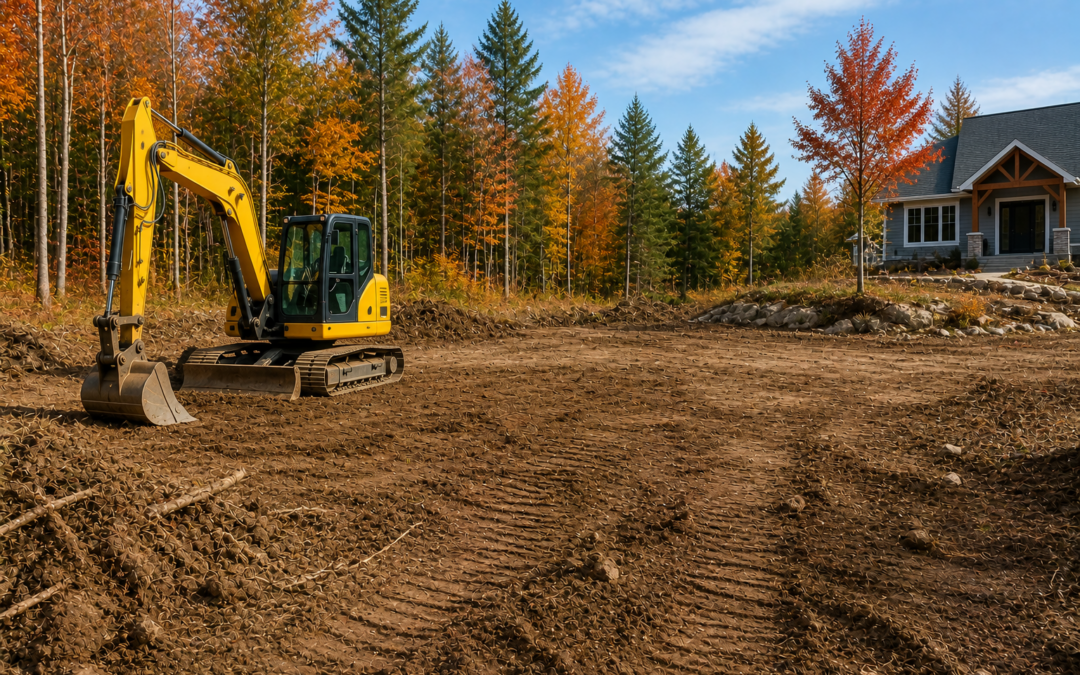
A successful construction project often begins months before the first foundation is poured. Property owners who plan ahead can use the time before construction to address land clearing, excavation, grading, drainage, access, and other site conditions that may otherwise create complications once building begins.
For many properties across Ottawa, Orléans, Rockland, Clarence-Rockland, Russell, and surrounding Eastern Ontario communities, fall can be an excellent season to evaluate and prepare land for future construction. Cooler temperatures, changing vegetation, and the approaching winter provide an opportunity to identify property concerns and complete important groundwork before the next major construction season.
Whether a homeowner is considering a new house, detached garage, workshop, driveway, addition, or other property improvement, early site preparation can make the eventual construction process more organized and efficient.
At Gallant Services, we provide professional excavation, grading, drainage, land clearing, and site preparation services throughout Eastern Ontario. We help property owners look beyond the future structure itself and consider the ground, access, elevations, and water management that will support the finished project.
Construction Success Begins Before Construction
It is easy to think of construction as beginning when equipment arrives to dig a foundation. In reality, significant planning should happen before that stage.
A building site may need:
- Land clearing
- Stump and root removal
- Excavation
- Rough grading
- Drainage improvements
- Driveway preparation
- Utility trenching
- Access preparation
Addressing these requirements early can help establish a more organized site for later construction.
Fall provides an opportunity to assess these needs while the property is still accessible and before winter changes the landscape.
Fall Can Reveal Important Drainage Problems
One of the biggest advantages of evaluating a property during fall is the opportunity to observe water movement.
Autumn rainfall can reveal areas where drainage is not performing effectively. Property owners may notice water collecting beside buildings, low spots remaining saturated, runoff crossing driveways, or erosion developing along slopes.
These observations can provide valuable information before a future construction project changes the property’s elevations.
Gallant Services evaluates drainage as part of the overall site rather than treating individual puddles as isolated problems.
Understanding where water currently travels helps determine how future excavation and grading should be planned.
Why Drainage Should Be Addressed Before Building
Adding a structure changes the way water moves across a property.
A new house, garage, or workshop creates a roof that collects rainfall and snow. A new driveway creates another surface that changes runoff patterns. Foundation excavation and backfilling also modify existing elevations.
If drainage is considered only after construction, correcting problems can become more disruptive.
Planning water management during the site preparation stage allows grades, drainage routes, driveway elevations, and building placement to work together more effectively.
This can be especially valuable on larger properties around Rockland, Clarence-Rockland, and Russell, where water may travel considerable distances across the land.
Vegetation Changes Can Make the Property Easier to Evaluate
As leaves fall and seasonal vegetation begins to thin, some properties become easier to inspect.
Dense summer growth can hide:
- Uneven ground
- Rocks
- Stumps
- Drainage channels
- Old debris
- Low areas
- Existing access routes
Fall conditions may provide a clearer view of the terrain, particularly on wooded or overgrown properties.
This can help property owners better understand what needs to be cleared or prepared before construction.
Land Clearing Can Be Part of Early Preparation
A wooded building lot may require significant clearing before excavation begins.
The work can involve more than cutting trees. Depending on the project, preparation may include removing brush, stumps, root systems, surface debris, and unsuitable organic material from construction areas.
Planning clearing around the future project is important.
Space may be required not only for the building footprint but also for:
- Equipment movement
- Material deliveries
- Driveway access
- Utility installation
- Drainage work
- Future landscaping
At Gallant Services, we consider how the entire construction site will function rather than focusing only on the exact area where the structure will stand.
Fall Preparation Can Help Create Better Construction Access
Equipment access is a major consideration for any building project.
Excavators, loaders, delivery vehicles, concrete trucks, and other machinery need reliable routes into and around the construction area.
On undeveloped properties, these routes may need to be cleared, excavated, graded, and prepared before construction begins.
Rural properties throughout Russell, Rockland, Clarence-Rockland, and nearby Eastern Ontario communities often require longer access routes than suburban sites.
Preparing access in advance can help prevent the future construction area from becoming unnecessarily congested.
Driveway Planning Should Happen Early
The driveway is frequently one of the first permanent improvements on a new property.
It provides access during construction and later becomes an important part of everyday property use.
Before driveway excavation begins, several factors should be considered:
- Location
- Elevation
- Soil conditions
- Drainage
- Culvert requirements where applicable
- Future garage location
- Vehicle turning needs
Planning these details early can prevent the driveway from conflicting with future buildings, utilities, or drainage routes.
Fall can be an effective time to evaluate these conditions and begin preparing for future access.
Rural Construction Sites Benefit From Long-Term Planning
Large rural properties often involve multiple projects rather than a single structure.
A property owner may initially plan a house but eventually want:
- A detached garage
- A workshop
- Equipment storage
- Additional parking
- Outdoor recreational areas
- Other accessory structures
Site preparation should consider these possibilities whenever practical.
For example, the placement of a driveway can influence future garage access. Drainage routes may affect where additional structures can be located. Utility corridors may need to serve more than one building.
Thinking about the property’s long-term use during initial excavation can help reduce unnecessary future disruption.
Smaller Lots Require Careful Coordination
Ottawa and Orléans properties often present different site preparation challenges.
Construction may take place close to:
- Existing homes
- Neighbouring properties
- Fences
- Landscaping
- Walkways
- Utility services
Limited working space makes planning especially important.
There may be fewer options for equipment access and soil storage, and grades often need to be managed precisely.
Professional site preparation helps coordinate these conditions before major construction activities begin.
Rough Grading Establishes the Shape of the Site
Once clearing and excavation are underway, rough grading begins establishing the basic elevations of the property.
This stage can influence:
- Building areas
- Driveway slopes
- Drainage routes
- Yard elevations
- Future landscaping
The goal is not necessarily to create the final finished lawn immediately. Instead, rough grading prepares the property for construction while considering how water and access will be managed.
Accurate grading at this stage creates a stronger foundation for the final property layout.
Preparing for a Detached Garage or Workshop
Fall is also an excellent planning period for property owners considering a garage or workshop.
These buildings may require:
- Site clearing
- Foundation excavation
- Base preparation
- Drainage grading
- Driveway extensions
- Utility trenches
Waiting until construction is ready to begin before considering these requirements can introduce avoidable complications.
Evaluating the site in advance helps determine what excavation and preparation will be needed.
Utility Routes Should Be Considered Before Excavation
Underground utilities are another important part of construction planning.
Depending on the project, underground infrastructure may include water service, electrical conduit, drainage piping, or communication services.
The location of these services can influence excavation and grading.
Planning utility routes alongside driveways and future structures can help reduce unnecessary excavation later.
Professional site preparation takes the complete property layout into consideration.
Fall Is a Good Time to Identify Erosion
After summer storms and during autumn rainfall, erosion may become more noticeable.
Property owners may discover:
- Soil channels along slopes
- Washed-out driveway edges
- Exposed roots
- Sediment collecting in low areas
- Erosion around culverts
These conditions provide clues about how water behaves on the property.
If construction is planned for the following season, addressing existing erosion and drainage concerns beforehand can prevent those issues from interfering with the new project.
Preparing for Spring Snowmelt
Fall property preparation is not only about future construction. It can also help a property enter winter in better condition.
Spring snowmelt can place significant pressure on drainage systems throughout Eastern Ontario.
Water may travel across frozen or partially frozen ground rather than soaking into the soil.
Low areas can fill quickly, and poorly drained driveways may become saturated.
Addressing obvious grading and drainage problems before winter can help prepare the property for the spring thaw.
Site Preparation Can Reduce Future Rework
One of the benefits of careful preparation is reducing the likelihood that completed work will need to be disturbed later.
For example, installing landscaping before correcting a drainage problem may eventually require portions of that landscaping to be removed.
Likewise, completing a driveway before planning underground utility routes can lead to additional excavation.
Coordinating site work in a logical order can help protect completed improvements.
A typical project might progress through clearing, excavation, drainage preparation, utility work, base preparation, construction, final grading, and landscaping.
The exact sequence varies by project, but planning ahead is valuable in every case.
Professional Equipment Helps Prepare Difficult Sites
Undeveloped and rural properties can contain challenging terrain.
Professional excavation equipment can be used for:
- Stump removal
- Soil excavation
- Rough grading
- Driveway preparation
- Drainage work
- Site shaping
The right equipment allows work to be completed efficiently while adapting to different property conditions.
Gallant Services uses professional site preparation methods based on the project’s specific requirements.
Every Property Requires a Different Approach
There is no single excavation plan that works for every property.
A wooded rural lot outside Russell may require substantial clearing and a long driveway. A property in Rockland may need drainage improvements before a garage can be constructed. A residential project in Orléans may require precise excavation within a confined space, while a property in Ottawa may involve careful grading around existing improvements.
This is why site evaluation is so important.
The terrain, soil, drainage, access, and future use of the property all influence the work required.
Preparing Now Can Support Future Property Value
Good site preparation is largely invisible once a construction project is finished.
Homeowners see the house, driveway, lawn, garage, or landscaping. They do not necessarily see the excavation, base preparation, grading, or drainage work beneath those improvements.
Yet these hidden elements contribute significantly to how well the finished property functions.
Properly prepared land can support better drainage, dependable access, stable surfaces, and more flexible future development.
These benefits can contribute to the long-term usability and appeal of the property.
From Fall Planning to Future Construction
Imagine a wooded property in Eastern Ontario that will eventually become a family home.
In fall, the owner begins by evaluating the land. The intended building area is identified. Access requirements become clearer as vegetation thins. Autumn rainfall reveals a low section where water collects.
Instead of waiting until construction begins, the property owner addresses these conditions early.
The necessary area is cleared. The driveway route is planned around drainage. Rough grading prepares the building site, and future utility routes are considered.
When the next stage of construction begins, the property is no longer simply undeveloped land. It has been intentionally prepared for what comes next.
That is the value of planning ahead.
Professional Fall Site Preparation Across Eastern Ontario
Fall provides an opportunity to look at a property strategically before future construction begins.
Gallant Services provides professional excavation, grading, drainage, driveway preparation, land clearing, culvert work, and site preparation throughout Ottawa, Orléans, Rockland, Clarence-Rockland, Russell, and surrounding Eastern Ontario communities.
Whether the future project involves a new home, garage, workshop, driveway, drainage improvement, or general property development, we help prepare the land with the finished project in mind.
Our approach considers terrain, water movement, access, elevations, and long-term property use so that each phase of site preparation supports the next.
Contact Gallant Services to Prepare Your Property
If construction is part of your property’s future, there is value in preparing the site before building begins.
From clearing overgrown land and establishing access to correcting drainage and preparing grades, Gallant Services can help create a stronger starting point for your project.
Call Gallant Services at (613) 834-0050 or email gallant.serv@gmail.com to discuss professional excavation, grading, drainage, land clearing, driveway preparation, and site preparation services.
Gallant Services proudly serves Ottawa, Orléans, Rockland, Clarence-Rockland, Russell, and surrounding Eastern Ontario communities, helping property owners prepare today for successful construction tomorrow.