
Trees are a defining feature of properties across Ottawa, Orléans, Rockland, Clarence-Rockland, Russell, and surrounding communities. They bring beauty, shade, and environmental benefits that make every home more inviting. But sometimes, even the most majestic tree becomes a hazard. Knowing when to remove a tree isn’t just about appearance, it’s about safety, prevention, and property protection.
If you’ve ever wondered whether a tree on your property might need to come down, November is the perfect time to find out. The leaves are gone, visibility is better, and the ground is still workable before deep winter sets in. Below, we’ll cover the top five signs it’s time for removal and what you can do to ensure your property remains secure year-round.
1. Visible Structural Damage or Cracks
How to Identify Structural Weakness
When a tree begins to split, crack, or lean, it’s showing clear signs of internal failure. Look closely at the trunk and main limbs for visible splits, bulges, or cavities. These are early warnings that the tree may not be able to handle strong winds or heavy snow.
Cracks along the main stem or at the base are especially concerning. Once the structural integrity is compromised, even a mild storm can cause a collapse, potentially endangering your home, vehicles, or nearby power lines.
Why This Matters in Winter
Ottawa’s winters add significant weight and stress to trees. Heavy snow and ice can easily push a weakened trunk past its breaking point. Removing a compromised tree now prevents emergency situations later when storms hit and access becomes more difficult.
2. Significant Lean or Shifting Roots
Recognizing a Dangerous Lean
A slight lean doesn’t always mean danger, but when a tree begins to tilt more than usual or the soil around it starts to lift, it’s a red flag. Check the ground on the side opposite the lean. If you see soil cracking, roots lifting, or gaps forming between the soil and trunk, the root system may be losing its hold.
Root Movement and Soil Heaving
Root systems are a tree’s anchor. When they begin to fail — due to erosion, construction, or decay — the entire tree becomes unstable. A strong gust of wind or heavy ice load can easily bring it down. This is particularly risky near driveways, structures, or walkways where people or property are nearby.
Removing a leaning or uprooted tree before the ground freezes ensures safe access for equipment and prevents serious damage when winter storms arrive.
3. Dead or Dying Branches in the Canopy
Spotting Decline Before It’s Too Late
A few dead branches are normal, but when large sections of a tree canopy are dry, brittle, or leafless during growing months, it may be in decline. Dead wood becomes heavier with ice, making it more likely to snap and fall.
Branches that consistently shed large limbs, or trees that only leaf out on one side, are often suffering from internal decay. These are early indicators that full removal may be the safest choice.
Why Pruning Alone Might Not Help
Pruning can extend a healthy tree’s life, but once decay spreads into the trunk, no amount of trimming will stop the progression. That’s why identifying these issues in November — before winter snow adds stress — is essential.
4. Signs of Rot, Fungus, or Pest Infestation
What Tree Decay Really Means
Fungal growth at the base of a tree, such as mushrooms, conks, or soft spots in the wood, signals internal rot. Once decay begins inside the trunk, the tree loses strength from the inside out.
Rot weakens the connection between the trunk and root system, turning the tree into a potential hazard. If the bark peels off easily or you see hollow sections, it’s time to act.
Pest Damage Warning Signs
Pests like carpenter ants, borers, and termites often target decaying wood. If you see sawdust near the base, small exit holes, or ant trails, there’s likely more damage than meets the eye. Infested trees not only pose a falling risk but can also attract pests toward your home.
Removing infected trees early protects nearby healthy ones and prevents spread throughout your property.
5. Location Hazards and Proximity Concerns
Too Close for Comfort
Even a strong, healthy tree can become problematic if it’s too close to structures, utilities, or high-traffic areas. Overhanging branches near roofs or driveways can break under snow load, while roots growing under driveways or foundations can cause cracking or heaving.
Trees growing too close to hydro lines are especially concerning during winter ice storms. In these cases, strategic removal or reduction may be necessary for long-term safety.
Creating Safer Landscapes
Removing a problematic tree doesn’t mean losing your property’s charm. It means preventing avoidable damage and creating space for future, better-placed plantings. With proper planning, your yard can remain green, safe, and well-balanced.
The Tree Removal Process Explained
Many homeowners worry about the complexity of removing a mature tree, but with a professional team, it’s efficient and controlled. Here’s how the process typically unfolds:
- Assessment: The tree’s condition, location, and surrounding risks are evaluated.
- Safety Setup: Equipment and fall zones are organized to protect property and workers.
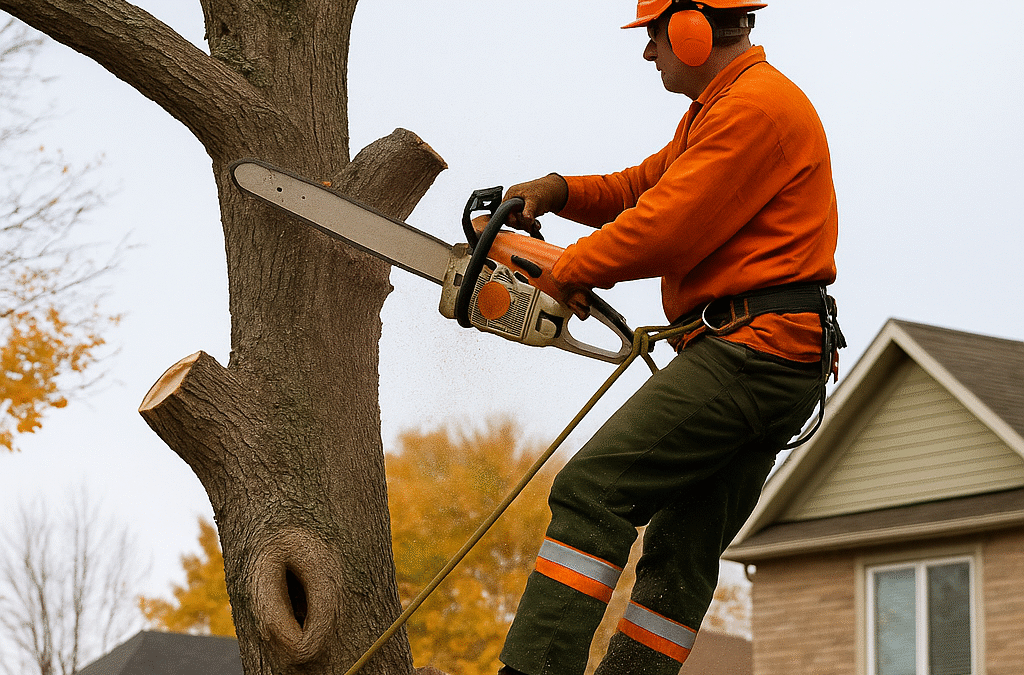
- Sectional Removal: The tree is carefully dismantled from the top down using specialized equipment.
- Stump Grinding and Root Extraction: The stump and root system are fully removed to prevent regrowth.
- Cleanup: The site is left clean and level, ready for replanting or landscaping.
Removing a dangerous tree now means fewer risks and fewer disruptions later in the season when conditions are harsh.
When Is the Best Time for Tree Removal?
While removal can happen year-round, late fall is one of the best times. The lack of leaves provides better visibility, the ground is still workable, and storms have not yet fully settled in. It’s also the perfect opportunity to combine other services, such as stump grinding or drainage improvements, while your property is being prepared for winter.
The Cost of Waiting Too Long
Delaying removal might seem like a money-saving choice, but it often leads to higher costs later. Emergency removals during winter storms are more complex, and fallen trees can damage roofs, siding, or vehicles. Taking action now prevents all of that — and provides peace of mind heading into the harsh season.
The Local Advantage
In the Ottawa region, weather plays a huge role in tree health. The freeze-thaw cycles, high winds, and heavy snow mean trees here face more stress than in many other climates. Choosing a professional team familiar with local soil conditions and weather patterns ensures your property gets the right care every time.
Gallant Services understands how to safely assess, remove, and clean up hazardous trees without damaging surrounding landscapes or structures. With modern equipment and years of local experience, we provide homeowners with dependable, efficient results — every time.
Safety Starts with Action
If you’re unsure about a tree on your property, don’t wait for visible damage to confirm your fears. A professional inspection can quickly determine whether pruning, cabling, or removal is the right step. Being proactive is always safer than waiting for the next storm to make the decision for you.
Book Your Service Today
Your property’s safety begins with proper tree care. Don’t wait until heavy snow or wind turns a weak tree into an emergency.
Call Gallant Services at 613-834-0050 or request your free quote today to schedule your professional tree inspection and removal. Our experienced team serves Ottawa, Orléans, Rockland, Clarence-Rockland, Russell, and surrounding areas, helping homeowners protect what matters most, one tree at a time.