
When it comes to maintaining a strong, long-lasting property, few things are as overlooked, yet as critical — as proper grading and leveling. Homeowners across Ottawa, Orléans, Rockland, Clarence-Rockland, and Russell often focus on tree care, driveways, or landscaping, but the slope of your land plays a major role in how well your home stands up against water, frost, and erosion.
Whether you’re planning new construction, a driveway upgrade, or simply noticing water pooling around your home, understanding grading and leveling can help protect your foundation and yard for years to come.
Understanding What Grading and Leveling Really Mean
Grading and leveling are the foundation of a healthy property.
Grading refers to the way your land slopes, it determines how water flows across your property. A correctly graded yard directs water away from your home, driveway, and walkways.
Leveling, on the other hand, ensures that your surface is even and compacted, without dips or soft spots that collect water.
Together, these two processes protect your property from one of the most damaging elements, water. Poor grading can cause moisture to accumulate near your foundation, leading to leaks, structural damage, and costly repairs down the line.
How Improper Grading Leads to Problems
In Ottawa’s climate, the freeze-thaw cycle is relentless. When water pools around your foundation and freezes, it expands and exerts pressure on concrete walls, eventually creating cracks and leaks. This same process can lift driveways, buckle walkways, and erode lawns.
Even minor grading issues can lead to major headaches:
- Basement leaks after heavy rainfall or snowmelt.
- Uneven ground that becomes muddy or unstable.
- Cracks in driveways or patios caused by shifting soil.
- Poor drainage that damages plants and trees.
Homeowners often spot these warning signs after years of gradual damage. The good news is that with proper excavation, grading, and compaction, these problems can be corrected — and prevented from returning.
The Role of Excavation in Grading
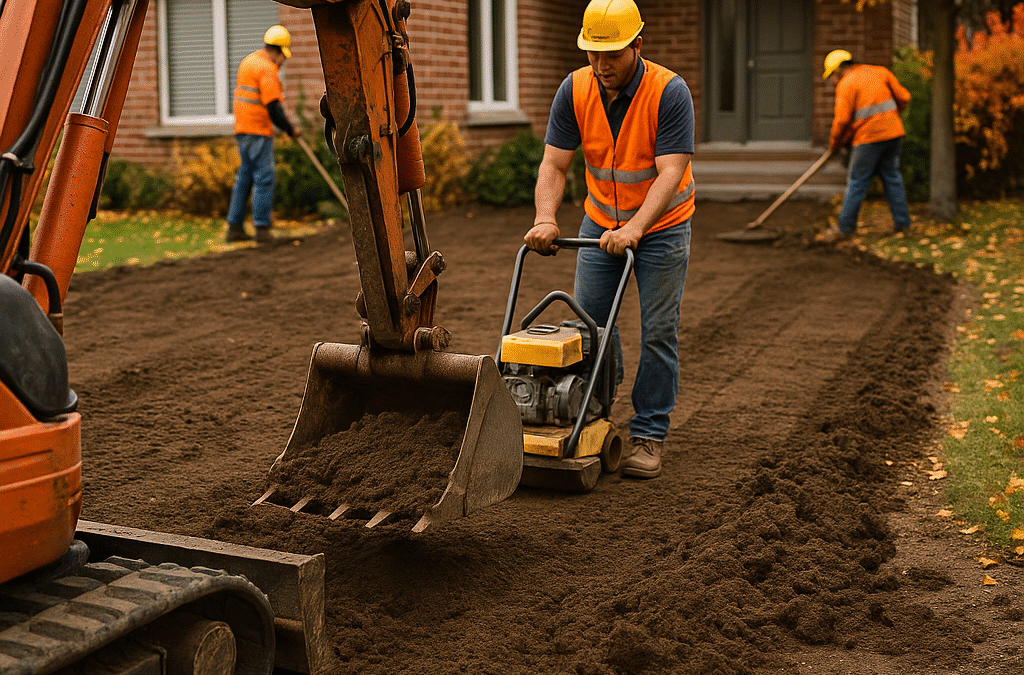
Before any grading can begin, excavation is often required to remove old soil, level out uneven areas, and expose problem zones. Excavation allows professionals to reshape the land for better flow, compact it for stability, and add materials where needed.
This process ensures that your property has the proper slope, typically about 5% away from the house, meaning for every ten feet, the ground drops around six inches. That gentle slope is enough to guide water safely away without causing erosion or flooding.
When done properly, excavation and grading create a strong base that supports driveways, patios, landscaping, and even large trees without settling or shifting.
Grading Around Driveways and Walkways
Driveways and walkways are often the first areas where grading issues become visible. You may notice puddles forming after rain, or frost heave that pushes the surface upward in winter. These are clear signs that water isn’t draining properly.
Correcting this requires adjusting the subgrade, the base beneath your driveway or walkway, so that water runs off instead of seeping underneath. Compaction is also essential here. Without proper compaction, soil shifts over time, creating dips and cracks.
By fixing the base now, before the freeze, you’ll extend the lifespan of your surfaces and make snow removal safer and easier during winter.
Grading for Better Landscaping and Tree Health
Good grading doesn’t just protect your foundation, it benefits your entire landscape. Trees and plants rely on balanced soil moisture. Too much water near roots can suffocate them, while too little can stunt growth.
By reshaping your property to allow controlled runoff, you create ideal growing conditions for trees, hedges, and lawns. This also reduces erosion and prevents topsoil from washing away during heavy rain or spring thaw.
If you’ve noticed soggy patches around your yard or struggling plants near low-lying areas, a grading inspection can help identify and fix the cause.
The Link Between Grading and Drainage Systems
Sometimes, grading alone isn’t enough — especially on larger properties or those with unique terrain. In those cases, trenching or culvert installation may be necessary.
A trench guides water through a controlled channel away from your property, while a culvert allows water to flow under driveways or low areas without eroding the soil. When grading and drainage systems work together, your property stays dry, stable, and protected year-round.
When to Regrade Your Property
Many homeowners wonder when grading should be done. The best time is before the ground freezes, typically in late fall or early spring. In November, conditions in the Ottawa area are still ideal for excavation and compaction work. The soil isn’t frozen yet, allowing heavy equipment to shape and compact effectively.
You should consider regrading if:
- You notice standing water after rainfall.
- Your basement shows damp spots or leaks.
- Your driveway or walkway develops dips or cracks.
- Soil near your foundation appears sunken or eroded.
Taking action now ensures that your home is ready for snowmelt in the spring, when drainage matters most.
Professional Grading vs. DIY Fixes
While it might be tempting to simply add a few loads of soil around your foundation, true grading requires precision. If the slope is too steep, you risk erosion. If it’s too flat, water won’t drain properly.
Professional grading uses laser levels, excavation tools, and soil compaction equipment to ensure accuracy and stability. It’s a long-term investment that protects your entire property, not just the surface you see.
The Importance of Compaction
Compaction is often the unsung hero of grading. After soil is reshaped, it must be compacted in layers to eliminate air pockets and prevent settling. Without proper compaction, soil can shift under weight or moisture changes, undoing all the work of grading.
Professionals use compactors to create a dense, stable base, especially under driveways, patios, and walkways. This is the foundation of lasting results and one of the key differences between temporary and permanent solutions.
Why This Matters in the Ottawa Region
The Ottawa region experiences a unique combination of weather extremes, from heavy snowfalls to rapid thaws and spring floods. This constant cycle of freezing and melting puts stress on soil and structures alike.
Proper grading, leveling, and compaction form your property’s first line of defense against these natural forces. By ensuring water flows where it should, you prevent problems before they start — and save thousands in potential repairs later.
Protect Your Investment
Whether you’re a homeowner preparing for winter or a property manager maintaining large grounds, grading and leveling should be part of your regular maintenance plan. It’s one of those behind-the-scenes jobs that no one notices when done right, but everyone notices when it’s not.
When handled by professionals, the results are long-lasting: dry basements, stable driveways, healthy landscapes, and peace of mind year-round.
Request Your Free Quote Today
Don’t wait until spring thaw to discover drainage or foundation issues. November is the perfect time to correct grading problems and secure your property for the months ahead.
Call Gallant Services at 613-834-0050 or request your free quote today to schedule your professional grading and excavation service. Our experienced team proudly serves Ottawa, Orléans, Rockland, Clarence-Rockland, Russell, and surrounding areas, keeping properties safe, dry, and built to last.