
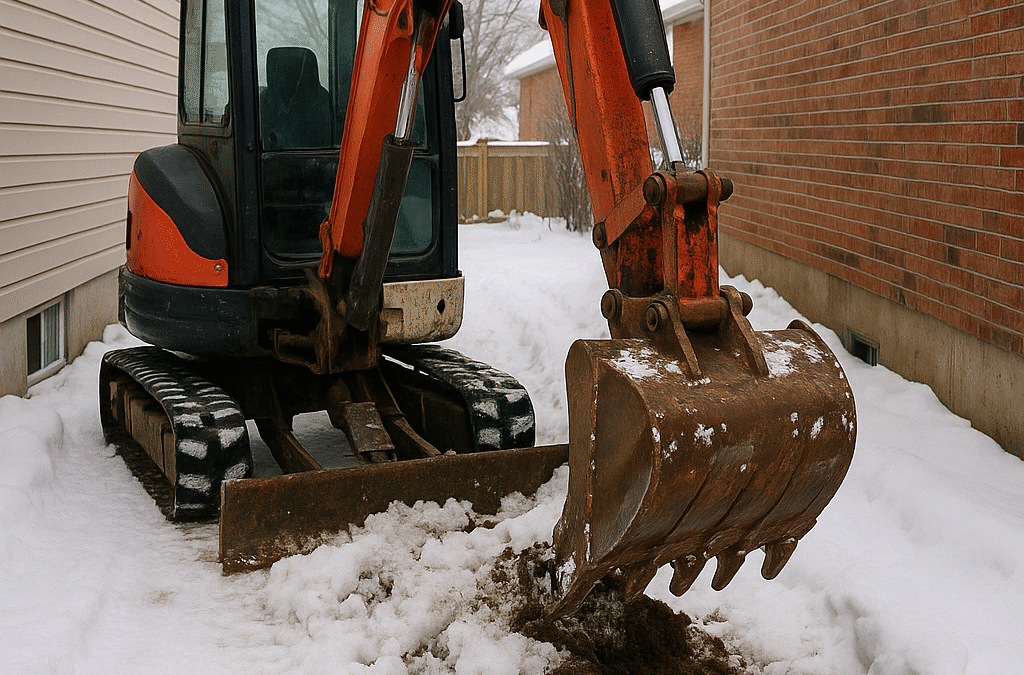
January in Ottawa, Orléans, Rockland, Clarence-Rockland, Russell, and surrounding areas brings a unique mix of challenges that homeowners face every year. Snow piles up, ice forms overnight, and meltwater flows where it shouldn’t. While many people focus on snow removal alone, the real dangers of winter often come from what happens under and around the snow — ice buildup, uncontrolled runoff, and hidden water damage.
At Gallant Services, we spend much of January helping homeowners reduce slip hazards, control meltwater, and protect their properties from winter-related damage. Ice and runoff are not just seasonal inconveniences; they are signs that grading, drainage, tree placement, or soil conditions need attention. Left unchecked, these problems can lead to injuries, foundation issues, and costly spring repairs.
In this blog, we explain how ice and runoff form in winter, why January is the critical time to address them, and how our excavation, grading, drainage, and tree services help keep Ottawa-area properties safer throughout the coldest months of the year.
Why Ice and Runoff Are Serious Winter Hazards
Winter hazards are not limited to heavy snowfalls. Ice and runoff often cause more damage than snow itself.
Ice Creates Dangerous Conditions Quickly
When snow melts during the day and refreezes at night, it forms hard ice layers on:
- Walkways
- Driveways
- Steps
- Side yards
- Sloped surfaces
These ice patches are difficult to see under fresh snow and are a leading cause of winter slips and falls. In dense residential areas like Orléans and Ottawa suburbs, these hazards are especially dangerous because of frequent foot traffic.
Runoff Forces Water Where It Doesn’t Belong
Frozen ground prevents water from soaking into the soil. Meltwater is forced to travel across the surface, often flowing toward foundations, garages, and low-lying areas. When this water refreezes, it expands and puts pressure on surrounding soil and structures.
In Rockland, Clarence-Rockland, and Russell, where properties may have longer driveways or open land, uncontrolled runoff can create widespread ice buildup and erosion.
How Ice and Runoff Damage Properties in January
By January, winter damage has usually begun to accumulate.
Foundation Stress and Water Intrusion
Repeated freezing and thawing near foundation walls can lead to:
- Cracks
- Seepage
- Basement moisture
- Long-term structural stress
Ice buildup against foundations traps moisture and prevents proper drainage, increasing the risk of interior water problems once spring arrives.
Driveway and Walkway Heaving
When water freezes beneath paved or interlock surfaces, it expands and pushes materials upward. This leads to:
- Uneven surfaces
- Cracked concrete or asphalt
- Shifted interlock stones
- Tripping hazards
These issues often start small in January and become major repair projects by spring.
Landscape and Soil Damage
Ice and runoff can erode soil, expose roots, and weaken tree stability. Over time, this affects grading and drainage patterns, making winter problems worse each year.
Why January Is the Best Time to Address These Issues
Many homeowners wait until spring to deal with water and ice problems, but by then, damage is already done. January offers a valuable opportunity to intervene while issues are active and visible.
In January, we can:
- Observe real-time runoff patterns
- Identify where ice consistently forms
- See how snowmelt moves across the property
- Address hazards before further freeze-thaw cycles occur
This allows us to provide targeted solutions instead of guesswork.
How We Reduce Ice and Slip Hazards
Correcting Drainage Flow
The most effective way to reduce ice is to eliminate the source of excess water. We adjust drainage paths to ensure meltwater flows away from walkways and driveways rather than pooling.
This may involve:
- Minor grading adjustments
- Creating controlled runoff channels
- Redirecting water away from high-traffic areas
Clearing Obstructions
Ice often forms because water is blocked by:
- Snowbanks
- Debris
- Fallen branches
- Ice dams
- Improperly placed landscaping features
We remove these obstructions to restore proper water movement.
Addressing Tree-Related Ice Problems
Trees can block sunlight and trap snow, allowing ice to persist longer. We assess tree placement and perform selective pruning or removal when necessary to improve sunlight exposure and airflow.
How We Control Winter Runoff
Winter Grading Solutions
Even small grading corrections can significantly reduce winter runoff. Frozen ground still allows us to make targeted adjustments that improve water flow.
We focus on:
- Redirecting water away from foundations
- Eliminating low spots where water collects
- Improving slope consistency
These changes help reduce ice formation and water pressure on structures.
Trenching and Drainage Relief
In areas with persistent runoff problems, trenching can provide immediate relief. Shallow winter trenches help guide meltwater away from problem areas, preventing refreezing near walkways and foundations.
Culvert and Drain Maintenance
Blocked or frozen culverts are a major cause of winter flooding and ice buildup. We inspect and clear culvert openings to restore proper drainage during melt events.
Protecting Walkways and Driveways in January
Walkways and driveways are among the most dangerous areas during winter. We help homeowners reduce risk by addressing underlying causes instead of relying solely on salt or sand.
Our approach includes:
- Improving drainage around surfaces
- Reinforcing weak edges
- Correcting slope issues
- Identifying early frost-heave signs
These steps reduce ice formation and help surfaces remain stable throughout winter.
Managing Ice Near Foundations and Structures
Ice buildup near foundations is a warning sign that water is not draining properly. We address these areas by:
- Improving grading near the home
- Creating drainage relief zones
- Clearing runoff paths
- Addressing soil displacement
Taking action in January helps prevent spring basement leaks and foundation damage.
How Trees and Roots Affect Winter Ice and Runoff
Tree roots can redirect water underground, forcing it to surface in unwanted areas. In winter, this often leads to ice forming along walkways or near foundations.
We evaluate:
- Root systems near structures
- Trees blocking sunlight
- Trees contributing to snow buildup
Root extraction, pruning, or tree removal may be recommended to reduce winter hazards.
Why Local Experience Matters for Winter Hazard Control
Winter conditions vary widely across Ottawa and surrounding areas. Soil type, lot layout, and drainage patterns all affect how ice and runoff behave.
Our experience working in:
- Ottawa
- Orléans
- Rockland
- Clarence-Rockland
- Russell
allows us to provide solutions tailored to local conditions rather than generic fixes.
The Cost of Ignoring Winter Ice and Runoff Problems
Ignoring winter hazards often leads to:
- Injuries from slips and falls
- Expensive spring repairs
- Driveway or walkway replacement
- Foundation damage
- Ongoing drainage issues
January is the best time to interrupt this cycle before damage compounds.
A Proactive Winter Safety Strategy
Managing ice and runoff is not about quick fixes. It’s about understanding how water moves on your property and correcting the underlying causes.
By taking a proactive approach in January, homeowners can:
- Improve safety
- Reduce property damage
- Lower maintenance costs
- Prepare for a smoother spring
Contact Us to Reduce Winter Hazards on Your Property
If ice buildup, runoff, or winter water damage is affecting your property, now is the time to act.
Call us at 613-834-0050 to schedule your winter property assessment.
We proudly serve Ottawa, Orléans, Rockland, Clarence-Rockland, Russell, and surrounding areas with professional winter drainage, grading, excavation, and tree services.
Let us help you make your property safer this winter and prevent costly problems before spring arrives.