
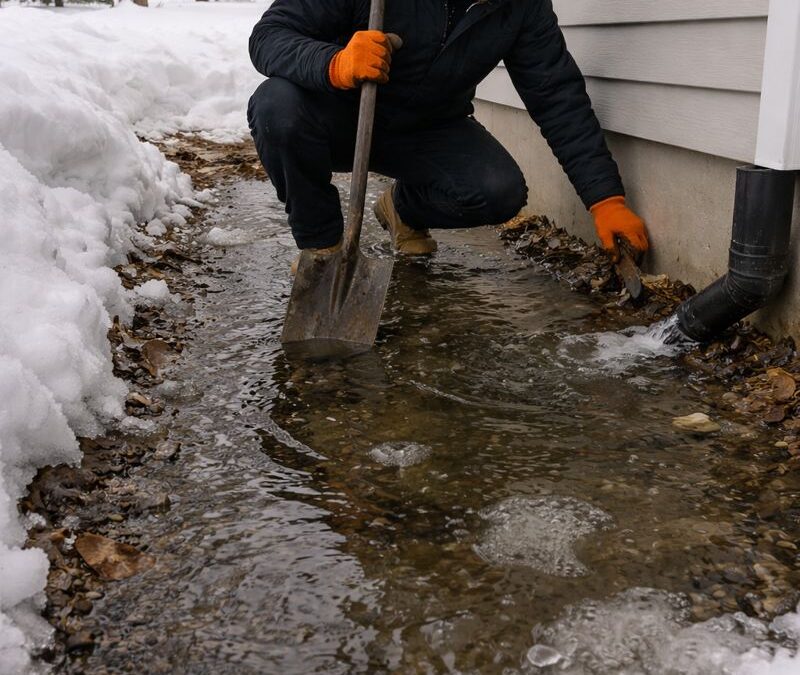
January is often seen as the quietest month of the year for outdoor work, but across Ottawa, Orléans, Rockland, Clarence-Rockland, Russell, and the surrounding areas, it’s actually one of the most revealing times to spot drainage problems. When snow begins to melt during mild winter days and refreezes overnight, it exposes weaknesses in grading, drainage paths, and soil stability that may go unnoticed in other seasons.
At Gallant Services, we use January as a diagnostic month. Frozen ground, snow coverage, and active melt cycles show us exactly how water behaves on a property under stress. Identifying and addressing these issues now helps homeowners avoid flooded basements, damaged driveways, erosion, and costly spring repairs.
In this blog, we explain why January is the ideal time to uncover drainage problems, what warning signs to look for, and how our excavation, grading, trenching, and culvert services help protect properties throughout the Ottawa region.
Why Drainage Problems Are More Visible in January
Drainage issues don’t suddenly appear in spring — they develop over time and become obvious during winter.
Frozen Ground Forces Water to the Surface
In January, soil is frozen solid. Meltwater cannot soak into the ground, so it travels across the surface instead. This makes it easy to see where water flows, where it pools, and where it freezes repeatedly.
These conditions highlight:
- Improper grading
- Low spots in the yard
- Blocked drainage paths
- Culverts that aren’t functioning properly
- Areas where water is forced toward the home
In Ottawa and surrounding communities with clay-heavy soils, this surface runoff is especially pronounced.
Common January Drainage Warning Signs
January offers clear visual clues that drainage problems exist.
Persistent Ice Patches
If ice repeatedly forms in the same areas — even after salting or clearing — it’s often a drainage issue, not a snow removal problem.
Water Pooling Near Foundations
Meltwater collecting against foundation walls is a major red flag. Repeated freezing and thawing in these areas can lead to cracks and moisture intrusion.
Snow Melting Unevenly
Uneven snowmelt often indicates poor grading or blocked runoff paths. Areas where snow melts quickly and refreezes repeatedly are especially vulnerable.
Frozen Drainage Ditches or Culverts
Blocked or frozen culverts prevent water from moving away from the property, causing backup and ice buildup.
Soft or Sunken Areas Under Snow
Depressions beneath snow often signal settling caused by poor drainage or decaying organic material below the surface.
Why Waiting Until Spring Can Be Costly
Many homeowners wait until spring to deal with drainage issues, but by then damage has already occurred.
Spring problems often include:
- Basement leaks
- Eroded soil
- Collapsed drainage paths
- Driveway or walkway heaving
- Landscape washouts
Addressing drainage in January allows us to stop the cycle before thaw magnifies the damage.
How We Assess Drainage Issues in January
Our winter assessments focus on how water behaves under stress.
Observing Active Melt Patterns
January melt cycles show us exactly where water wants to go. This real-time observation is far more accurate than guessing during dry seasons.
Evaluating Grade and Slope
We assess whether the land slopes away from structures or toward them. Even slight grade issues become obvious when water freezes repeatedly in the same locations.
Inspecting Existing Drainage Infrastructure
We inspect:
- Culverts
- Ditches
- Trenches
- Drainage channels
Frozen or blocked systems are often the root cause of winter water problems.
Identifying Tree and Root Interference
Tree roots can redirect water underground and force it to surface near foundations or walkways. January conditions make these disruptions easier to detect.
Drainage Solutions That Make Sense in January
While not all drainage work can be completed in deep winter, many effective solutions can still be implemented.
Clearing Drainage Paths
Snow, ice, debris, and fallen branches often block runoff routes. Clearing these paths immediately improves water flow.
Targeted Trenching
Shallow winter trenching can redirect water away from problem areas, reducing ice buildup and foundation stress.
Culvert Clearing and Adjustment
Restoring culvert flow prevents water backup and reduces widespread ice formation.
Minor Grading Corrections
In certain conditions, we can make small but impactful grading adjustments that improve drainage until permanent work is completed in spring.
How Drainage Issues Affect Other Parts of Your Property
Tree Stability
Poor drainage weakens soil around tree roots, increasing the risk of uprooting during winter storms.
Driveways and Walkways
Water freezing beneath paved surfaces leads to frost heave, cracks, and uneven surfaces.
Landscaping and Soil Health
Repeated freeze-thaw cycles erode soil and damage plant roots, leading to long-term landscape problems.
Why Local Knowledge Matters for Drainage Work
Drainage behavior varies widely across Ottawa and nearby areas. Soil composition, lot layout, and snow accumulation all influence how water moves.
Our experience working in:
- Ottawa
- Orléans
- Rockland
- Clarence-Rockland
- Russell
allows us to identify patterns specific to each area and recommend solutions that actually work in local conditions.
Preparing for Spring Thaw Starts in January
Spring thaw is when drainage problems cause the most damage. By identifying and addressing issues in January, homeowners can:
- Reduce basement moisture risks
- Prevent erosion
- Avoid emergency repairs
- Prepare for smoother spring transitions
- Lower long-term maintenance costs
January gives us time to plan and implement solutions before conditions worsen.
A Proactive Approach to Winter Drainage Management
Drainage problems rarely fix themselves. January is the month when they are easiest to identify and most affordable to control.
A proactive winter approach means:
- Fewer surprises in spring
- Safer walkways and driveways
- Better protection for foundations
- Healthier soil and landscapes
Contact Us to Assess Drainage Issues This January
If you’re noticing ice buildup, water pooling, or winter runoff problems on your property, now is the time to act.
Call us at 613-834-0050 to schedule a January drainage assessment.
We proudly serve Ottawa, Orléans, Rockland, Clarence-Rockland, Russell, and surrounding areas with professional excavation, grading, trenching, and drainage services.
Identifying drainage problems now can save you significant time, money, and stress when spring arrives.