
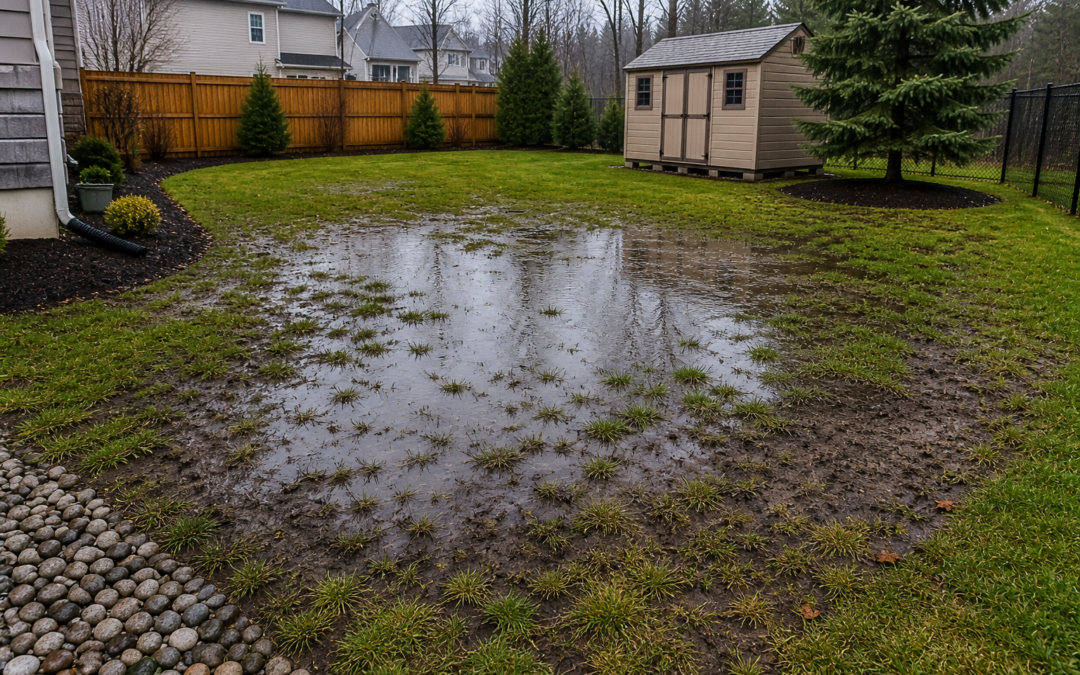
It often begins with something small. A section of lawn stays wet a little longer than the rest of the yard. After heavy rain, a puddle appears near the back corner of the property. During spring, that same area becomes muddy enough that walking across it leaves deep footprints.
At first, it may seem like an ordinary seasonal inconvenience.
Then the pattern continues.
Grass struggles to grow. The ground remains soft. Water begins collecting closer to a patio, shed, driveway, or foundation. After every significant rainfall, the same problem returns.
A backyard that never seems to dry may be telling an important story about the property’s grading and drainage.
Across Ottawa, Orléans, Rockland, Clarence-Rockland, Russell, and surrounding Eastern Ontario communities, seasonal rainfall, spring snowmelt, soil conditions, and changing property grades can contribute to persistent drainage problems. These concerns can affect small suburban yards as well as larger rural properties.
At Gallant Services, we provide professional excavation, grading, drainage, land clearing, and site preparation services. Our approach is to understand why water is collecting before determining how the property should be improved.
Instead of simply covering a wet area with more soil, the objective is to understand where the water originates, why it is stopping, and where it can be directed more effectively.
The Puddle Is Usually Only the Visible Symptom
Standing water is easy to notice, but the puddle itself may not be the actual problem.
Water collects because the surrounding property directs it toward that location or prevents it from continuing toward an appropriate drainage area.
Several conditions can contribute, including:
- Low spots in the yard
- Improper grading
- Soil settlement
- Compacted soil
- Runoff from neighbouring elevations
- Roof drainage
- Changes caused by landscaping
- Poorly functioning drainage routes
Simply removing the water does not change these conditions.
Professional drainage work begins by looking at the property as a complete system.
Every Property Has a Drainage Story
Imagine rainfall landing across a residential property in Orléans.
Some water falls on the roof and enters gutters. Some lands on the driveway, patio, lawn, and garden beds. Water from higher areas begins moving toward lower elevations.
If the property is graded effectively, that runoff follows predictable routes away from vulnerable areas.
If it is not, water begins collecting.
The same process occurs on a larger scale on rural properties around Russell, Rockland, and Clarence-Rockland. Runoff may travel from wooded sections, fields, slopes, driveways, and neighbouring land before reaching the developed portion of the property.
Understanding these pathways is one of the keys to improving drainage.
Why Low Spots Develop Over Time
A backyard may not have had drainage problems when the home was originally built.
Property elevations can change gradually.
Soil can settle around areas that were previously excavated. Organic material can break down. Landscaping projects may add soil in one location while lowering another. Heavy use can compact parts of the yard.
Even relatively small elevation changes can influence water movement.
Because water follows gravity, a depression does not need to be dramatic to collect runoff.
Professional grading can reshape these areas so water has a more effective path across the property.
Clay Soil Can Make Wet Areas More Noticeable
Soil composition has a significant influence on drainage.
Clay-rich soil tends to hold water differently than sandy or gravelly material. When precipitation is heavy or the ground is already saturated, infiltration can be slow.
As a result, surface grading becomes especially important.
Water that cannot soak into the ground quickly needs somewhere appropriate to travel.
Gallant Services considers both soil conditions and surface elevations when evaluating drainage concerns.
Why Adding Topsoil Is Not Always the Answer
One common response to a wet backyard is adding soil to the low area.
Sometimes adjusting elevations is part of the solution. However, simply filling the puddle without understanding the surrounding grade can move the water somewhere else.
The former low spot may become dry while another area begins collecting runoff.
In some situations, water may even be redirected toward a building.
Effective grading considers the complete route water needs to follow.
The goal is not simply to remove one low spot. It is to create a functional drainage pattern.
Water Near the Foundation Requires Special Attention
A wet lawn is inconvenient. Water collecting beside a foundation can be more concerning.
The ground immediately around a home should generally encourage surface water to move away from the building.
When the grade slopes toward the foundation or has settled significantly, rainfall and snowmelt may collect nearby.
Signs that exterior drainage conditions deserve attention can include:
- Persistent water near foundation walls
- Soil settlement around the home
- Damp areas close to basement walls
- Erosion near downspouts
- Water flowing toward the house
Not every basement moisture concern originates from exterior grading, but managing surface water is an important part of protecting the property.
Downspouts Can Concentrate Large Amounts of Water
Roof drainage can have a significant impact on a yard.
A roof collects precipitation from a large surface and channels it through gutters and downspouts.
If that water is discharged into a poorly graded area, the soil can quickly become saturated.
Repeated discharge can also contribute to erosion.
When evaluating a wet yard, it is important to consider how roof runoff interacts with the surrounding landscape.
Improving drainage may involve coordinating surface grading with existing water-discharge points so runoff can continue away from the structure.
Patios and Walkways Can Change Water Movement
Outdoor improvements can unintentionally alter drainage.
A patio, walkway, garden border, or other hardscape feature can interrupt a route water previously followed.
If surrounding elevations are not coordinated with the new feature, runoff may become trapped.
This is why drainage should be considered before major outdoor improvements are installed.
Excavation and grading can prepare the property so future landscaping works with the natural movement of water rather than against it.
The Backyard Shed May Be Part of the Problem
Accessory structures can also influence drainage.
A shed or small outbuilding creates another roof surface that collects rainfall. If the surrounding ground is flat or depressed, water may accumulate around the structure.
The building may also interrupt an existing surface drainage route.
Professional grading can help integrate accessory structures into the overall property drainage plan.
This becomes even more important for larger detached garages and workshops.
Swales Can Create a Natural-Looking Drainage Route
Not every drainage solution needs to involve an underground system.
In appropriate situations, a graded swale can help direct surface runoff across a property.
A swale is a broad, shallow depression designed to guide water toward a suitable drainage area.
Because it can be incorporated into the lawn or landscape, it may remain relatively unobtrusive.
The key is maintaining appropriate elevation throughout the route.
If the swale contains an unintended low point, water may simply stop and create another wet area.
Precision grading helps keep runoff moving.
Rural Properties Can Have Multiple Sources of Runoff
Drainage on a large rural property can be more complex than drainage on a smaller residential lot.
A wet area near the home may receive water from much farther away.
Runoff may originate from:
- Fields
- Forested areas
- Long slopes
- Driveways
- Roadside drainage
- Adjacent higher ground
This is common on properties throughout Rockland, Clarence-Rockland, Russell, and surrounding Eastern Ontario areas.
Treating only the immediate wet spot may not resolve the problem if water continues arriving from elsewhere.
A broader site evaluation can help identify how the entire property contributes to the drainage concern.
Driveway Drainage Can Affect the Yard
A driveway can act like a pathway for water.
If it slopes toward the home or backyard, runoff can travel along the driving surface and discharge into landscaped areas.
Gravel driveways may also develop ruts that channel water.
Culverts, roadside ditches, driveway crowns, and surrounding grades can all influence where this runoff travels.
When a wet yard is located near a driveway, the driveway drainage pattern should be included in the evaluation.
Spring Snowmelt Tells Property Owners a Lot
One of the best times to observe drainage is during spring thaw.
Snow accumulated over months can melt rapidly, creating a large volume of water.
If the soil remains frozen beneath the surface, infiltration may be limited.
Water then travels across the property according to the existing grade.
Watching where snowmelt flows and where it stops can reveal drainage patterns that are less obvious during ordinary rainfall.
Persistent spring pooling may indicate that grading improvements should be considered.
Fall Rainfall Can Reveal the Same Weaknesses
Autumn is another useful season for evaluating drainage.
Repeated rainfall can saturate the soil, making low areas more noticeable.
Property owners may see puddles remaining for several days or discover areas that become difficult to mow or walk across.
These patterns provide valuable clues.
A yard that repeatedly becomes saturated in spring and fall is demonstrating how it handles periods of increased moisture.
Erosion and Standing Water Can Exist on the Same Property
It may seem contradictory for one property to have both erosion and standing water, but the two problems are often connected.
Water can move quickly down a slope, carrying soil with it, and then collect in a lower area.
This creates erosion in one location and saturation in another.
Simply filling the eroded area or pumping out the low spot addresses neither part of the complete drainage pattern.
Professional grading aims to manage the route between the two.
Proper Grading Can Make Outdoor Space More Usable
Correcting drainage is not only about preventing property damage.
It can also make the yard more enjoyable.
A properly graded backyard may provide better conditions for:
- Lawns
- Gardens
- Children’s play areas
- Outdoor seating
- Patios
- Walking areas
- General property maintenance
A section of land that was previously avoided because it remained muddy may become a functional part of the property.
This can be especially valuable on smaller Ottawa and Orléans lots where every part of the yard matters.
Drainage Should Be Considered Before Landscaping
Homeowners often become excited about landscaping before addressing the ground beneath it.
However, new sod, gardens, decorative stone, and outdoor living spaces can struggle when installed over unresolved drainage problems.
Preparing the site first can protect the investment made in the finished landscape.
The process may include:
- Evaluating existing elevations.
- Identifying where water originates.
- Establishing an appropriate drainage route.
- Excavating or reshaping areas where necessary.
- Preparing the final grade.
- Completing landscaping after drainage has been addressed.
This order allows the visible improvements to be built on a more functional property.
Drainage Improvements Can Support Future Construction
A wet backyard may also interfere with future plans for a garage, workshop, addition, patio, or other improvement.
Building over or beside an unresolved drainage area can create additional complications.
Before construction begins, it is useful to understand how the new structure will affect runoff.
Gallant Services can coordinate drainage improvements with excavation and site preparation so the property is ready for what comes next.
Why Professional Excavation Equipment Matters
Correcting significant grading problems may require more than hand tools and additional topsoil.
Professional excavation equipment allows larger areas to be reshaped accurately and efficiently.
Depending on the project, equipment can be used to:
- Remove unsuitable material
- Adjust elevations
- Create drainage routes
- Prepare swales
- Regrade slopes
- Restore access areas
The objective is controlled site improvement rather than unnecessary disturbance.
Avoiding the Cycle of Temporary Repairs
A recurring drainage problem can lead to repeated maintenance.
One year, soil is added. The next year, gravel is placed in the muddy area. Later, landscaping is replaced.
Yet the water keeps returning.
Temporary repairs can become expensive when the underlying drainage pattern remains unchanged.
Addressing the cause may provide a more practical long-term approach.
At Gallant Services, we focus on understanding why the area remains wet before determining what site work may be appropriate.
Every Wet Yard Requires an Individual Solution
There is no single drainage solution for every property.
One backyard may need regrading. Another may benefit from a swale. A rural property may require improvements to a ditch or culvert. Another site may have several contributing conditions that need to be addressed together.
That is why professional evaluation matters.
The solution should fit the terrain, soil, existing improvements, surrounding elevations, and intended future use of the property.
Professional Drainage and Grading Across Eastern Ontario
A backyard that never seems to dry is more than an inconvenience. It may be evidence that water is not moving across the property effectively.
Gallant Services provides professional excavation, grading, drainage, land clearing, driveway preparation, culvert work, and site preparation throughout Ottawa, Orléans, Rockland, Clarence-Rockland, Russell, and surrounding Eastern Ontario communities.
We help property owners address:
- Standing water
- Low areas
- Poor grading
- Erosion
- Saturated lawns
- Driveway runoff
- Drainage around buildings
- Site preparation for future improvements
Our goal is to help create properties that manage water more effectively while remaining practical and attractive.
Contact Gallant Services for Professional Drainage Solutions
If the same section of your property remains wet after every storm, becomes muddy during spring thaw, or repeatedly collects standing water, it may be time to look beyond the puddle and evaluate the complete drainage pattern.
Gallant Services can help identify grading and site conditions that may be contributing to the problem and provide professional excavation and drainage solutions suited to the property.
Call Gallant Services at (613) 834-0050 or email gallant.serv@gmail.com to discuss professional excavation, grading, drainage, land clearing, culvert work, driveway preparation, and site preparation services.
Gallant Services proudly serves Ottawa, Orléans, Rockland, Clarence-Rockland, Russell, and surrounding Eastern Ontario communities, helping property owners turn persistently wet and difficult outdoor areas into better-drained, more functional spaces.