
When construction equipment leaves a property and the major building work is complete, it can feel like the difficult part of the project is over. The home, garage, addition, or other structure is standing, the driveway is taking shape, and attention begins shifting toward lawns, gardens, walkways, and landscaping.
However, one important stage still has a significant influence on how the property will perform for years to come: final grading.
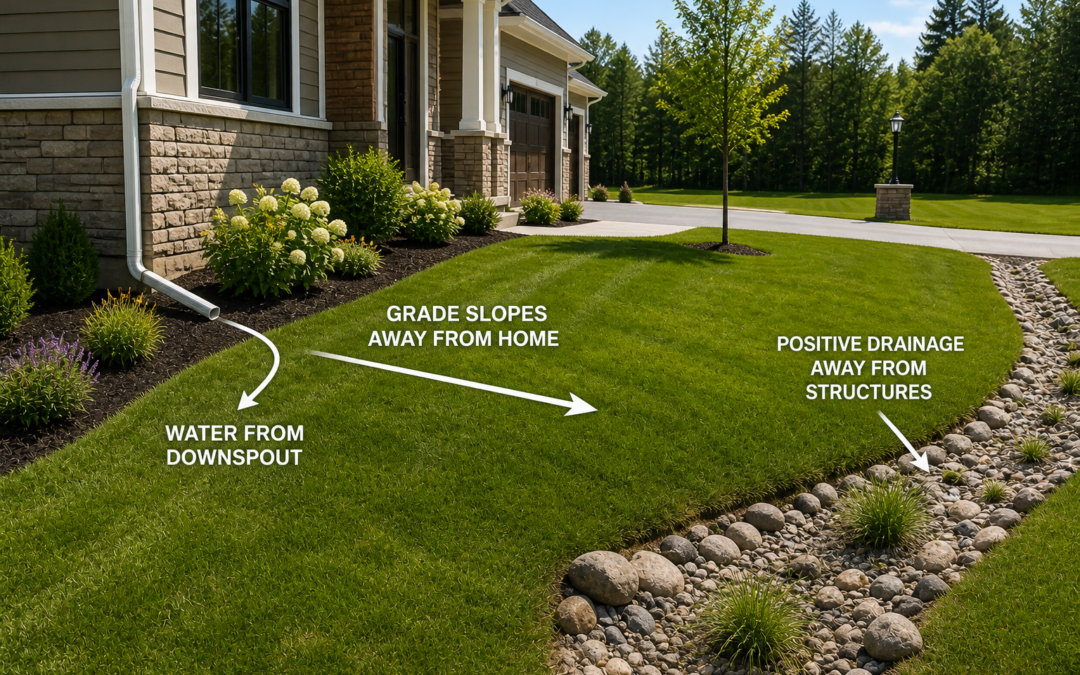
Final grading determines the finished shape and elevations of the land surrounding a building. It influences where rainwater travels, how quickly snowmelt leaves the property, whether low spots develop, how landscaping performs, and whether water is directed toward or away from important structures.
Across Ottawa, Orléans, Rockland, Clarence-Rockland, Russell, and surrounding Eastern Ontario communities, proper grading is especially important because properties experience heavy rainfall, spring snowmelt, frozen ground, and repeated freeze-thaw cycles. Even relatively small elevation problems can become noticeable when the property is exposed to these seasonal conditions year after year.
At Gallant Services, we provide professional excavation, grading, drainage, land clearing, driveway preparation, and site preparation services. We understand that final grading is not simply about making a construction site look smooth. It is about shaping the property so that the home, driveway, landscaping, and outdoor areas can function together.
What Is Final Grading?
Final grading is the process of establishing the finished contours and elevations of a property after major construction and excavation work has been completed.
Earlier in a construction project, rough grading may be used to create general elevations for the building site, access routes, drainage areas, and surrounding land.
Final grading is more precise.
It prepares the property for its completed use and may establish areas for:
- Lawns
- Gardens
- Walkways
- Patios
- Driveways
- Drainage routes
- Outdoor living spaces
The objective is to create a functional surface while maintaining appropriate drainage.
Why the Land Around a Home Should Never Be an Afterthought
A newly constructed home may have a strong foundation and carefully installed exterior finishes, but the surrounding land still plays an important role in managing water.
Rainfall and melting snow need somewhere to go.
If the surrounding grade directs water toward the building, moisture can repeatedly collect near the foundation.
If the land contains depressions, standing water may develop.
If slopes are too aggressive, runoff can contribute to erosion.
Proper final grading creates a transition between the structure and the surrounding property that helps manage these conditions.
Water Follows Elevation
The fundamental principle behind grading is simple: water travels downhill.
What makes grading challenging is that small changes in elevation can alter the route water takes.
A yard may look level to the eye while still having enough slope to direct water in a particular direction.
Likewise, an area that appears only slightly depressed can become a persistent collection point during heavy rainfall.
Professional grading uses the site’s elevations to create intentional water movement rather than leaving runoff to find its own unpredictable route.
Final Grading Helps Protect the Foundation Area
One of the most important goals of grading around a home is directing surface water away from the foundation.
Roof runoff, rainfall, and snowmelt can all contribute significant amounts of water around a building.
If the surrounding ground has settled or slopes toward the house, that water may remain close to the foundation longer than intended.
Exterior grading is only one part of overall moisture management, but it is an important part.
At Gallant Services, we look at how the ground surrounding the building connects with the rest of the property so water has a practical route away.
Construction Can Change Existing Drainage Patterns
Before construction begins, an undeveloped property has its own natural drainage pattern.
Building a home changes that pattern.
A roof collects precipitation. A driveway creates a different surface. Foundation excavation changes soil conditions. Walkways, patios, and landscaping alter elevations.
As a result, water may no longer travel exactly where it did before construction.
Final grading allows the property to be reshaped around these new conditions.
Instead of trying to preserve a drainage pattern that no longer fits the site, grading establishes one appropriate for the completed property.
Soil Settlement Can Affect Grades
Construction requires excavation.
After foundations, utilities, and other underground work are completed, excavated areas may be backfilled.
Over time, disturbed areas can behave differently from soil that has remained untouched.
If settlement develops, previously acceptable grades can change.
A shallow depression may begin holding water, or the grade beside the foundation may no longer perform as intended.
Property owners should pay attention to noticeable changes in elevation following construction.
Professional regrading can sometimes correct areas affected by settlement before landscaping problems become more extensive.
Why Low Spots Become Frustrating
A low spot in a yard often becomes obvious after the first significant rainfall.
Water collects, grass becomes saturated, and the area may remain muddy long after the rest of the property dries.
During spring, these locations can become especially noticeable as snow melts.
Repeated standing water can interfere with:
- Lawn maintenance
- Landscaping
- Outdoor recreation
- Access
- Garden health
Simply adding soil directly to the puddle may not solve the underlying issue.
The surrounding grades need to be evaluated to understand why water is arriving there and where it should travel instead.
Grading and Landscaping Need to Work Together
Landscaping is often one of the final stages of a construction project.
New lawns, gardens, trees, walkways, and outdoor living spaces can dramatically improve the property’s appearance.
However, landscaping should be installed on a site that already manages water effectively.
If drainage problems are discovered after sod, gardens, or decorative features are installed, correcting the grade can require disturbing completed work.
Preparing the final grade first provides a better foundation for landscaping.
It also allows landscape features to be planned around established drainage routes.
Topsoil Alone Does Not Create Proper Drainage
Topsoil is valuable for establishing lawns and gardens, but it should not be expected to correct significant grading problems by itself.
If the underlying site contains major depressions or inappropriate slopes, spreading topsoil over the surface may simply reproduce those conditions.
Proper grading begins with the larger shape of the land.
Once appropriate elevations are established, suitable surface materials can be placed as required for the intended landscaping.
This sequence helps prevent landscaping materials from being used as a substitute for actual site preparation.
Final Grading Around Driveways
Driveways and surrounding yards should be planned together.
Water leaving the driveway needs somewhere appropriate to travel.
Likewise, runoff from surrounding land should not continually cross the driveway in ways that contribute to erosion or washouts.
Professional grading can help establish transitions between the driveway and adjacent areas.
On rural properties around Rockland, Clarence-Rockland, and Russell, this may also involve coordinating grades with roadside ditches, culverts, or longer private drainage routes.
Rural Properties Need a Bigger-Picture Approach
Large rural properties often involve more complex grading because water can travel over greater distances.
A home may sit on only a small portion of a much larger lot.
Runoff can arrive from:
- Wooded areas
- Open fields
- Higher terrain
- Long driveways
- Adjacent sections of the property
Correcting a grade immediately around the home without considering these larger drainage patterns may not address the entire issue.
Gallant Services evaluates how developed areas interact with the surrounding property so grading decisions can account for broader water movement.
Ottawa and Orléans Lots Require Precision
Urban and suburban properties often have less space available for drainage.
In Ottawa and Orléans, neighbouring homes, fences, driveways, patios, and landscaping can all be relatively close together.
This means grading changes need to be carefully planned.
There may be limited room to redirect water, and improvements should not simply transfer drainage concerns to another area.
Accurate site preparation becomes particularly important when working within compact residential environments.
Grading Around Detached Garages and Workshops
Accessory buildings need proper surrounding grades just as homes do.
A detached garage or workshop introduces another roof surface and may require a driveway or parking area.
Without appropriate grading, water can collect around the structure or flow across access areas.
When Gallant Services prepares a site for a detached building, we consider not only the foundation area but also the finished surrounding elevations.
This helps integrate the new structure into the existing property.
Outdoor Living Areas Depend on the Final Grade
Patios, walkways, seating areas, and other outdoor improvements are often installed after construction.
Their success depends partly on the grades established beforehand.
A patio should not become a barrier that traps water against the home.
A walkway should connect smoothly with surrounding surfaces.
Lawns should direct water appropriately around these features.
Planning final grades before outdoor improvements are installed helps the entire property work together.
Erosion Can Signal an Incorrect Grade
Not every grading problem creates standing water.
Sometimes water moves too quickly.
A steep or poorly directed slope can concentrate runoff, causing soil to wash away.
Signs of erosion can include:
- Small channels in soil
- Exposed roots
- Washed-out landscape areas
- Sediment collecting downhill
- Driveway edge damage
Professional grading can reshape the affected area so runoff is managed more effectively.
The objective is controlled movement rather than uncontrolled flow.
Spring Is a Major Test of Property Grading
Eastern Ontario’s spring thaw can reveal grading problems that are less noticeable during other seasons.
Snow accumulated around a home and across the yard may melt quickly.
If the ground remains frozen, much of that water travels over the surface.
Low areas can fill rapidly, while poorly graded sections near a home may direct water toward the foundation.
Observing the property during spring can provide useful information about where grading improvements may be needed.
Autumn Rain Can Reveal Problems Before Winter
Fall rainfall can also expose drainage concerns.
Areas that remain saturated for long periods may indicate insufficient slope or poor drainage.
Addressing significant grading concerns before winter can help prepare the property for the next spring thaw.
This is particularly important when homeowners are planning future landscaping or construction.
Understanding existing drainage before adding new improvements can prevent avoidable rework.
Grading Can Restore Older Properties Too
Final grading is often associated with new construction, but established properties can also benefit from professional regrading.
Over many years, soil can settle and landscaping can change.
New patios, driveways, additions, gardens, sheds, and other improvements can alter water movement.
An older property that once drained effectively may eventually develop standing water or erosion.
Professional grading can help restore more functional drainage while preparing the property for future use.
Regrading Before a Major Landscape Renovation
A large landscape renovation is an ideal time to evaluate existing grades.
Before investing in new sod, gardens, walkways, or outdoor living areas, homeowners can identify whether drainage problems should be corrected first.
If excavation is already required for the renovation, coordinating grading work can make the project more efficient.
This approach helps protect the investment in the finished landscape.
Final Grading Can Improve Everyday Property Use
Good grading is not only about preventing damage.
It can make a property easier to enjoy.
Properly shaped outdoor areas can provide:
- More usable lawns
- Better access
- Drier recreational spaces
- Improved landscaping conditions
- More dependable walkways
- Better integration between different property features
The difference may not always be dramatic visually, but homeowners often notice it in how the property performs after rain and snowmelt.
Precision Matters More Than Appearance
A freshly graded yard can look smooth and attractive, but appearance alone does not determine whether the grade is effective.
The important question is whether elevations create the intended drainage pattern.
Professional grading combines visual shaping with functional water management.
At Gallant Services, we consider where water originates, how it crosses the property, and where it needs to continue.
That larger perspective helps create grades designed around real property conditions.
A Finished Property Is a Connected System
A home, driveway, lawn, patio, garage, and drainage system should not be treated as completely separate features.
They all influence one another.
Water leaving the roof reaches the surrounding ground. The yard directs that water toward another area. A driveway can intercept or redirect it. Landscaping can slow or block it.
Final grading helps connect these elements into a more functional property.
That is why grading deserves careful attention even though much of the work becomes nearly invisible once landscaping is complete.
Professional Grading Across Eastern Ontario
Gallant Services provides professional grading, excavation, drainage, land clearing, driveway preparation, culvert work, and complete site preparation throughout Ottawa, Orléans, Rockland, Clarence-Rockland, Russell, and surrounding Eastern Ontario communities.
We assist property owners with grading for:
- New home construction
- Established residential properties
- Detached garages and workshops
- Driveways
- Landscaping renovations
- Outdoor living areas
- Drainage improvements
- Rural property development
Every site is different, which is why our approach considers terrain, soil conditions, water movement, existing improvements, and future plans.
Contact Gallant Services for Professional Grading and Site Preparation
Construction may end, but the grade surrounding a home continues working every time it rains or snow begins to melt.
If your property has low areas, standing water, erosion, settlement, poor drainage, or needs final grading after construction, professional site work can help establish more functional elevations.
Call Gallant Services at (613) 834-0050 or email gallant.serv@gmail.com to discuss professional grading, excavation, drainage, land clearing, driveway preparation, and site preparation services.
Gallant Services proudly serves Ottawa, Orléans, Rockland, Clarence-Rockland, Russell, and surrounding Eastern Ontario communities, helping property owners create better-drained, more functional land that continues performing long after construction is complete.